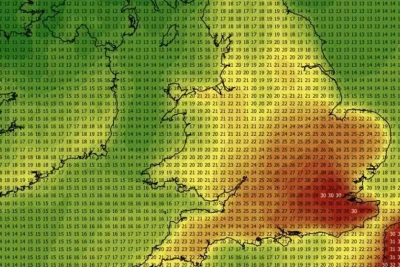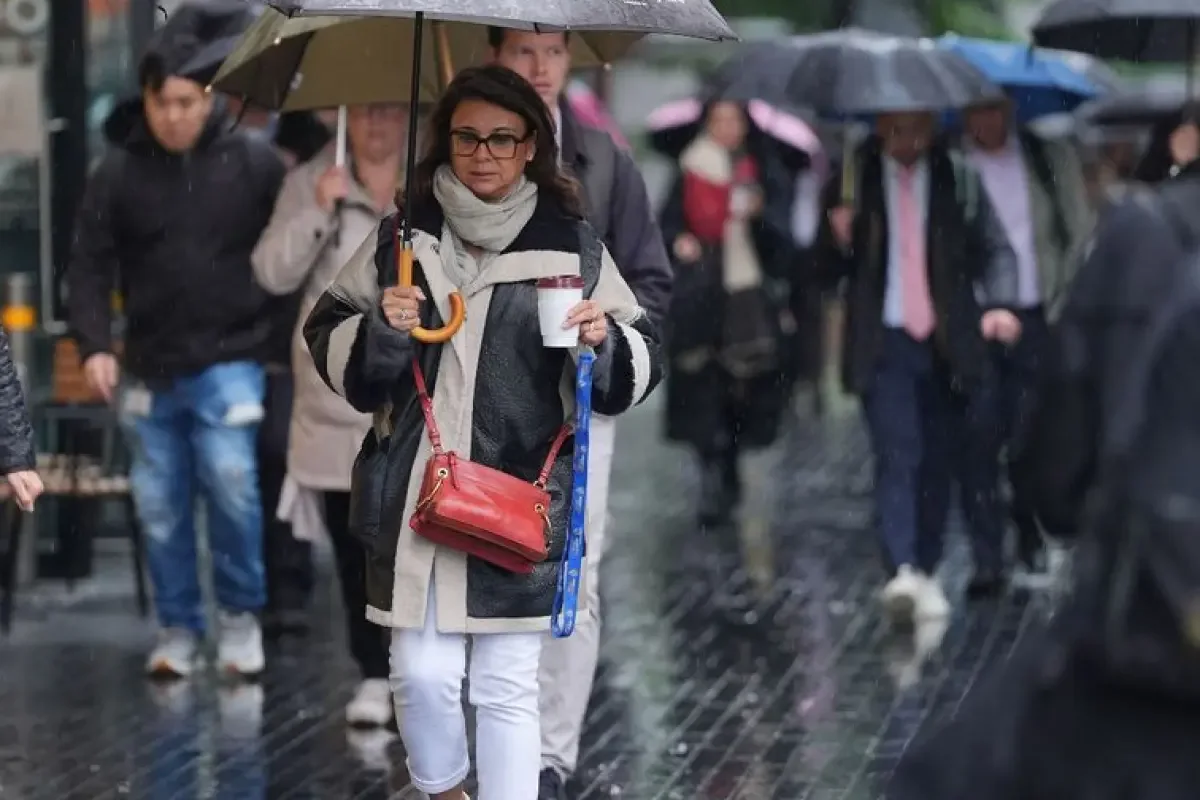
BBC weather forecasters have announced that London will experience widespread thunderstorms and heavy rain starting Tuesday, June 2, 2026, following a historic May heatwave that shattered century-old temperature records across the United Kingdom.
The shift brings an abrupt end to scorching conditions that recently peaked at 34 degrees Celsius in parts of the capital, prompting a heat health alert in Norfolk.
>>> Los Angeles Housing Crisis Persists Despite Significant Population Loss
Forecasters state that thundery showers will hit on Tuesday and Thursday, with rainy weather expected to persist until Saturday, June 6, 2026, before temperatures stabilize around 23 degrees Celsius.
Record-Breaking May Heat
Data from the Reading University Atmospheric Observatory revealed that Reading experienced its hottest May day on record on May 25, when temperatures reached 32.8 degrees Celsius.
This figure surpassed the previous May record of 31.9 degrees Celsius set on May 29, 1944, and marked a historic monthly temperature range of 32.9 degrees after sub-zero frosts occurred earlier in the month.
“You might remember that the first half of May was rather cold, with a cold northerly wind and even night frosts.
This month has now set another new record, for the greatest range in temperature yet recorded in any month in Reading,” said Dr Stephen Burt, of the University of Reading Department of Meteorology.
Burt noted that the previous highest monthly range occurred in May 1944 at 32.8 degrees.
He added that several entire years, including 1974, recorded smaller overall temperature ranges than this single month.
Climate Experts Warn of Intensifying Extremes
“Heatwaves in the UK are often occur when a stubborn area of high atmospheric pressure blocks the usual cooler, moister weather systems.
When the atmosphere gets stuck in a rut, this can cause a build-up of heat as the sun bakes the already parched ground and it becomes difficult for the hot air to escape.
Trapped air is forced to sink and heat up like a pressure cooker, under the increasing weight of the atmosphere aloft.
This lid on the lower atmosphere, sometimes referred to as a heat dome, also stops the uplift of air needed to form cloud and rain,” said Professor Richard Allan, Professor in Climate Science at the University of Reading.
Allan explained that rising greenhouse gas levels make it difficult for Earth to lose excess heat.
This process intensifies droughts in some areas while funnelling stolen moisture into severe storm systems elsewhere.
“The sustained sunshine rapidly dries the soil meaning less of the sun’s heat is used evaporating moisture and the full force of the sun bakes the ground,” said Professor Richard Allan.
Allan emphasized that human-caused climate warming directly intensifies both extreme heatwaves and sudden, severe rainfall events.
“It is well known from the science that as greenhouse gas levels continue to rise due to human activities, it is becoming increasingly difficult for Earth to lose excess heat to space.
A warmer, thirstier atmosphere is more effective at drying soils, intensifying heatwaves and drought in one regions while channelling this excess, stolen moisture into storm systems elsewhere.
>>> Marvel Studios Enhances Visuals for Upcoming Spider-Man Sequel
This means human caused warming of climate is intensifying heatwaves and droughts as well as extreme rainfall and associated flooding,” said Professor Richard Allan.
The Met Office long-range forecast confirmed this volatile shift, predicting that Atlantic frontal systems moving across the United Kingdom will continue to bring prolonged showers and longer spells of wet weather.
“In addition to extreme daytime temperatures, nights are offering little relief, with temperatures failing to drop below 20°C in some areas.
This is creating tropical nights that prevent homes from cooling down, leaving indoor spaces warm and uncomfortable well into the early hours.
This is particularly significant in the UK, where housing is largely designed to retain heat rather than release it.
Well insulated buildings, limited cross ventilation, minimal use of air conditioning, and urban heat retention from concrete and brick all contribute to trapping warmth indoors.
As a result, indoor spaces can remain uncomfortably hot long after sunset,” said Dr Akshay Deoras, climate scientist at the University of Reading.
Deoras warned that the 40 degrees Celsius threshold reached in July 2022 is becoming increasingly plausible earlier in the year.
He stated that the current heatwave is also sweeping across Europe, with southwestern France expecting similar extremes.
“What was once considered a distant scenario is now becoming reality, with the UK increasingly exposed to extreme heat events.
The 40°C threshold, once thought highly unlikely, was already reached during the July 2022 heatwave, and early heatwaves this year have further reinforced how quickly such extremes are becoming more plausible,” said Dr Akshay Deoras.
The risk extends to holidaymakers and outdoor residents across the region, who are urged to monitor for symptoms of heat exhaustion.
“This heatwave is also affecting much of Europe, with temperatures forecast to reach 40°C in southwest France later this week.
Whilst the holiday season may tempt people outdoors, the risks should not be underestimated.
It is essential to stay hydrated, seek shade during peak hours, and take early signs of heat exhaustion seriously.
These include dizziness, headaches, nausea, rapid heartbeat, excessive sweating followed by sudden cooling, and confusion. If symptoms worsen, medical attention should be sought promptly,” said Dr Akshay Deoras.
>>> Champion Foods Recalls Cheese Bread Over Salmonella Fears
According to the BBC, conditions in London will briefly clear by Sunday, June 7, 2026, bringing sunny intervals and daytime highs of 22 degrees Celsius.