Los Angeles continues to grapple with a severe housing shortage and soaring real estate costs, even as its population steadily declines.
Data from 2026 shows that smaller household sizes, decades of underbuilding, and historical zoning laws prevent the market from adjusting to the demographic shift.
>>> Marvel Studios Enhances Visuals for Upcoming Spider-Man Sequel
According to U. S.
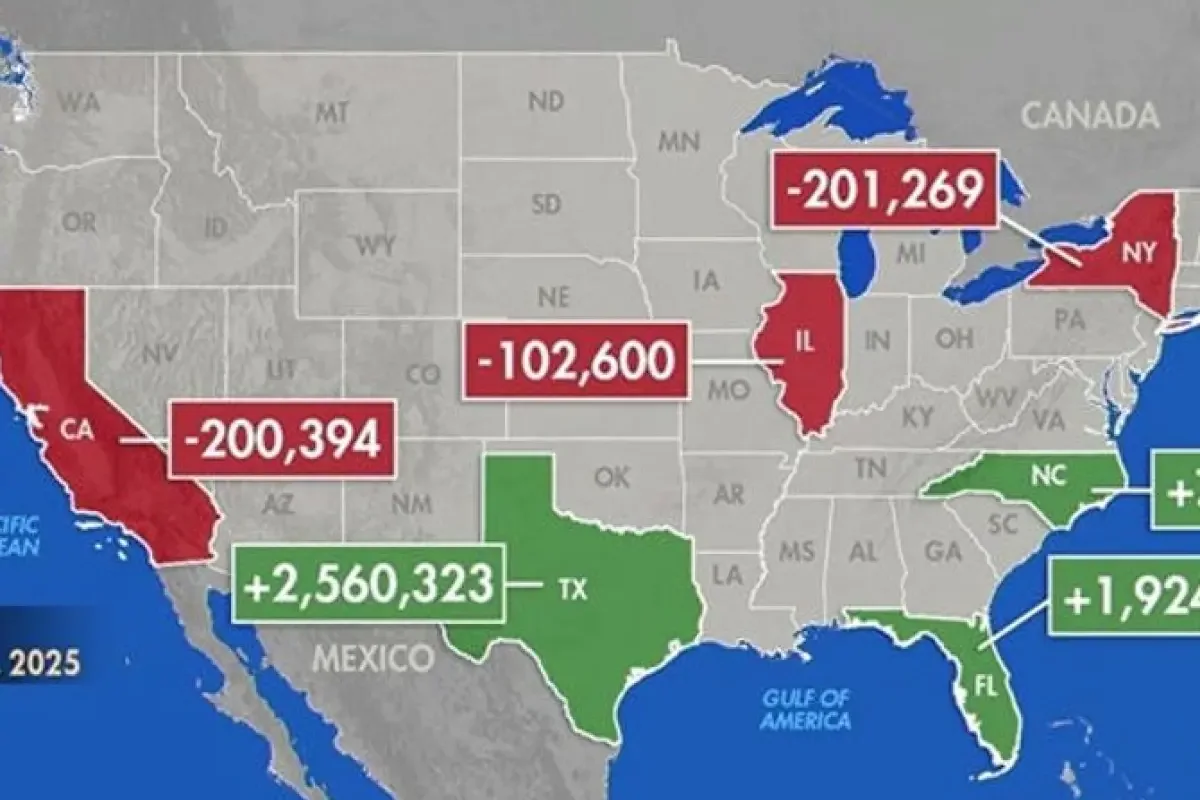
Census Data and real estate experts, Los Angeles County lost 62,000 residents last year, following a broader trend of losing 400,000 people since 2016.
Meanwhile, a Los Angeles Times report found that outbound residents relocating to cities like Phoenix, Nashville, and Dallas are driving up housing prices in those destinations faster than in Los Angeles itself.
Local experts point to structural issues that keep housing costs high despite the population loss. "People are moving out of L.
A.
, but households are becoming smaller, so the number of households that require housing is actually rising," said Stephanie Hawke, associate research director of land use and supply at the Terner Center.
Hawke noted that the average household size in the county dropped from 2.98 in 2010 to 2.81 in 2024.
This change means fewer people occupy individual housing units, keeping demand elevated. "We build less than we need," she said.
State housing targets require Los Angeles County to construct over 800,000 housing units by 2029, including 450,000 within the city.
Hawke stated that lower-income residents are being pushed out by higher-income replacements who can afford steep rents. "Remember who's moving out and moving in," she said.
The demographic shift impacts the cultural and social fabric of the region. "You have to think about what, and who, makes L.
A. ," Hawke said.
She questioned the future identity of the city if vulnerable working-class communities continue to be displaced. "Are you forcing those folks out?
And will it be the same city if everybody leaves?" she asked.
Historical Supply Deficits and Policy Constraints
Other demographic experts highlight that historical supply deficits continue to stress the current market.
"A growing housing stock is accommodating fewer people," said Hans Johnson, a senior fellow at the Public Policy Institute of California.
>>> Champion Foods Recalls Cheese Bread Over Salmonella Fears
Johnson attributed smaller households to falling birth rates among younger residents and older individuals living alone.
"California has long had a housing shortage," Johnson said. He explained that current construction rates cannot compensate for decades of inadequate supply.
"So even though we've been building new housing over the last five years at a time of negative population growth, there's an outstanding stock of undersupply that means markets are stressed, and prices remain higher in L.
A. than the rest of the country," Johnson said.
Real estate professionals report that state and local tax policies also contribute to the constrained housing supply by discouraging property sales.
"People sit on homes because they don't want to pay capital gains taxes or the 'Mansion tax,'" said real estate agent Bret Parsons.
Parsons stated that this behavior worsens the wealth gap as homeowners accumulate equity while renters are forced to leave.
Local political candidates argue that archaic land-use regulations are the primary cause of the ongoing supply crisis.
City Council candidate Henry Mantel cited the Tenant Anti-Harassment Ordinance in 2021, stating that "The City of Los Angeles has an extreme shortage of affordable rental housing."
Mantel criticized the City Council for delaying state density laws and failing to reform single-family zoning, which restricts development on over 70% of residential land.
He pointed to the 1979 Los Angeles Rent Stabilization Ordinance, which read: "There is a shortage of decent, safe and sanitary housing in the City of Los Angeles…" Mantel used this to illustrate the longevity of the crisis.
He argued that the lack of construction harms local businesses, increases fossil fuel use, and reduces California's federal political representation.
Out-of-state researchers observe that the exodus is altering real estate dynamics across the United States.
"People were going to dramatically less expensive locations," noted Evan White, co-founder of the California Policy Lab, in a comment to the Los Angeles Times regarding the shrinking affordability gap.
Receiving cities are now attempting to manage the influx of former California residents to protect local housing access.
>>> Iowa Police Investigate Gunman Who Killed Six Relatives in Muscatine
Austin architect Chris Gannon told the Los Angeles Times that if fewer Californians come, "that's probably better for the folks here because that means less competition."