Montreal municipal water production remained safely below critical capacity thresholds between May 30 and June 3, 2026, following an emergency conservation appeal issued after officials discovered a severely deteriorated main aqueduct pipe on Atwater Avenue.
Daily potable water processing at the Atwater and Charles-J. -Des Baillets plants averaged 1.190 billion liters during the five days after the announcement.
>>> USDA Confirms Second Screwworm Case in Texas Cattle
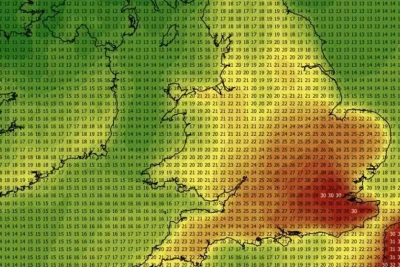
This volume represents a minor decrease from the previous five-day average of 1.198 billion liters, keeping municipal distribution safely below the city's maximum threshold of 1.45 billion liters per day despite regional temperatures rising to 29 degrees Celsius.
City Urges Continued Conservation
City spokesperson Hugo Bourgoin confirmed that current usage patterns meet safety requirements but noted that sustained conservation remains necessary for the local infrastructure.
"Bien que les données actuelles soient en deçà du seuil, il est essentiel que les citoyens poursuivent leurs efforts alors que l’été et les températures plus élevées s’installent à Montréal," Bourgoin said, emphasizing that historically, marked consumption increases occur each summer.
To assist with conservation, the municipality announced its own operational cutbacks, including the suspension of continuous water main purging and preventive sewer flushing.
The broader conservation initiative targets 16 Montreal boroughs and six linked cities for a six-week period, aiming to reduce summer water consumption by 100 million liters per day.
Advocacy Group Calls for More Data
The water advocacy group Eau secours reviewed the municipal figures and noted that total consumption has essentially leveled off rather than declining significantly.
>>> Montreal Residents Cut Water Use by Only 1% After Pipe Warning
"En fait, on pourrait dire que c’est stable," said Rébecca Pétrin, director general of Eau secours.
Pétrin expressed concern that the city did not differentiate data between residential usage and commercial, industrial, or institutional sectors, noting that commercial air conditioning units rely heavily on the aqueduct system during hot weather.
"Parce que, dans le secteur résidentiel, il n’y a pas tant de différences entre une journée chaude et une journée fraîche, si ce n’est l’arrosage et quelques autres usages.
Mais dans le secteur industriel et commercial, il peut y avoir de grosses différences, parce qu’il y a beaucoup de systèmes de climatisation qui s’alimentent sur l’aqueduc," she said.
The organization urged municipal officials to maintain active public messaging across all consumer sectors throughout the repair period.
"Je pense qu’il faut voir ça positivement, du fait que notre système est assez résilient pour nous permettre de travailler d’urgence sur une conduite sans être obligés d’utiliser des méthodes coercitives vraiment féroces," Pétrin added.
>>> Louisiana Church Alters Bulletin to Pray for Clergy Abuse Victims
The municipal conservation guidelines continue to request that residents limit lawn watering, take shorter showers, and reduce running water during daily domestic tasks while repairs proceed on the McTavish reservoir feeder pipe.