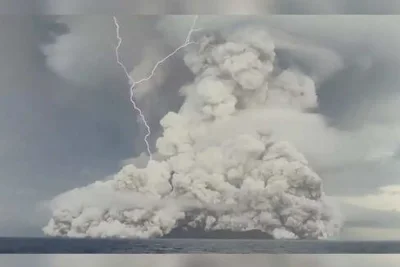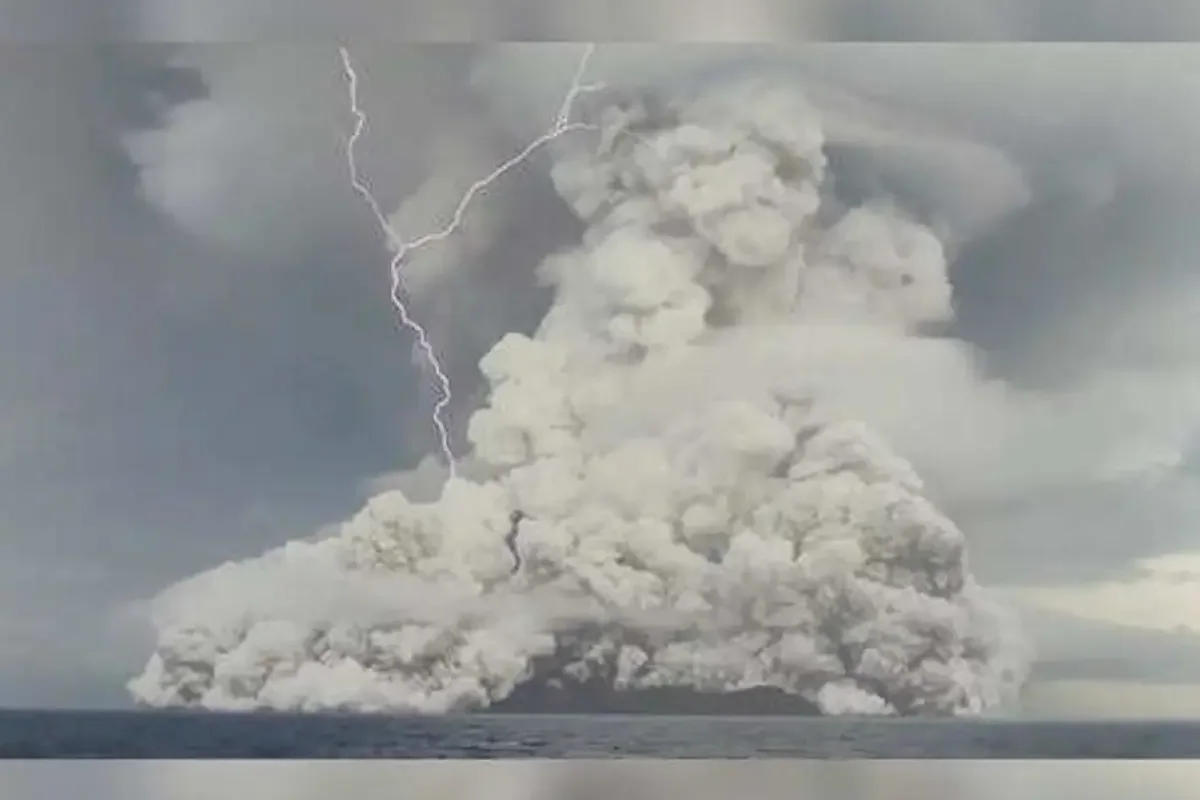
The 2022 underwater eruption of the Hunga Tonga-Hunga Ha'apai volcano in the South Pacific triggered unexpectedly high levels of atmospheric methane destruction, according to a study published in Nature Communications.
An international research team used satellite observations to track formaldehyde, a short-lived chemical byproduct generated when methane breaks down.
>>> UK Appoints Former M&S CEO Marc Bolland to Tackle Youth Unemployment Crisis
The data revealed exceptional concentrations of formaldehyde high in the stratosphere, indicating that massive volumes of methane were being oxidized inside the volcanic plume.
"We found the highest HCHO enhancement ever recorded in the stratosphere," said the researchers.
Scientists estimate that the volcanic plume eliminated approximately 900 tonnes of methane per day. This process was driven by highly reactive chlorine radicals that accelerate the breakdown.
>>> Longest-Serving Flight Attendant Joan Prince Crandall Retires After 66 Years
The January 2022 eruption injected unprecedented quantities of water vapor and sulfur dioxide more than 30 kilometers into the atmosphere.
According to NOAA, the explosion and subsequent tsunami caused over $118 million in damages and destroyed entire low-lying islands.
Effective public awareness efforts limited the toll to four tsunami-related fatalities.
>>> UK Hires Former M&S Chief Marc Bolland to Tackle Youth Unemployment Crisis
While researchers caution that volcanic eruptions themselves do not represent a viable climate solution, the observed iron-rich ash interaction with chlorine provides critical insights for developing future atmospheric methane-removal technologies.