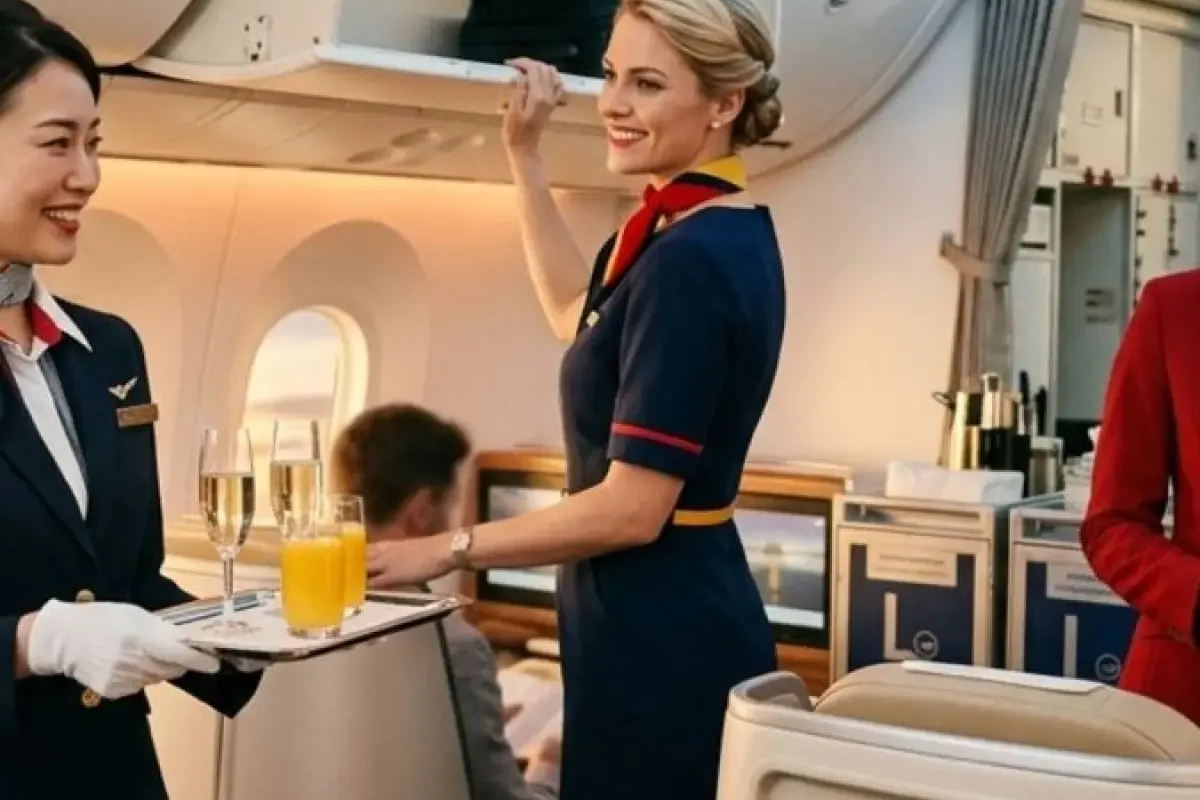
Joan Prince Crandall retired from Delta Air Lines on May 30, 2026, concluding a record-breaking 66-year career as the longest-serving flight attendant in aviation history.
The Seattle-based crew member officially surpassed the previous longevity milestone.
>>> UK Hires Former M&S Chief Marc Bolland to Tackle Youth Unemployment Crisis
A Career Spanning Seven Decades
Crandall began her professional journey in 1959 with Pacific Airlines.
Her career spanned the entire modernization of commercial aviation, transitioning from loud propeller-driven aircraft to modern, fuel-efficient wide-body jets.
Guinness World Records officially recognized Crandall in January 2026 as the holder of the longest career as a flight attendant.
She surpassed Bette Nash of American Airlines, who held the previous record of 64 years and 61 days.
The global aviation industry also paused on May 31, 2026, to celebrate Flight Attendants' Day.
The occasion highlights cabin crews as frontline employees managing airport disruptions, passenger safety, and in-flight medical emergencies.
Data shows the typical US flight attendant serves between 8 and 12 years, according to industry statistics.
According to the US Bureau of Labor Statistics, the average flight attendant salary is approximately $70,980.
Crandall reflected on her extensive career, which witnessed massive legislative changes for women following the 1964 Civil Rights Act, alongside the physical evolution of the aircraft she worked on.
"That has been my career – from stewardess to flight attendant," Crandall told CNN.
She noted that airlines initially sought a specific aesthetic for their staff when she entered the industry during the late 1950s.
>>> Mamdani Skips Israel Day Parade Amid Security and Backlash
"The airlines wanted young women who had a glamourous look," said Crandall.
The strict policies regarding weight, appearance, marriage, and mandatory early retirement ages eventually dissolved over subsequent decades of aviation history.
"In this day and age, (the policies) would have never happened," said Crandall.
She recalled her excitement when airlines introduced new jet engines that significantly increased commercial flight capabilities.
"Higher, faster, smoother, more seats," Crandall exclaims.
The introduction of the Civil Rights Act altered the professional landscape for women across the United States by legally prohibiting sex discrimination.
"(The Civil Rights Act) changed life for you and me and women in the country, but it was a big change for flight attendants," said Crandall.
Her retirement marks the departure of the final active commercial cabin crew member hired during the 1950s.
"I like to think of it as being in this long silver tube, but faster, higher," said Crandall.
Newer generations are now entering the industry as experienced crew members complete their service.
"For me, the biggest part of it was the true emotional connection (with Delta employees and passengers)," said Alise Broussard, a flight attendant who recently graduated from Delta's In-Flight Training Center.
>>> Azealia Banks Invited to Spectator Magazine Summer Party in London
The operational duties performed by cabin crews during travel crises directly affect overall safety and industry metrics.