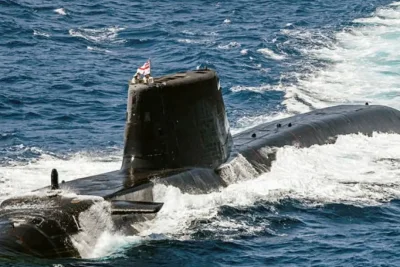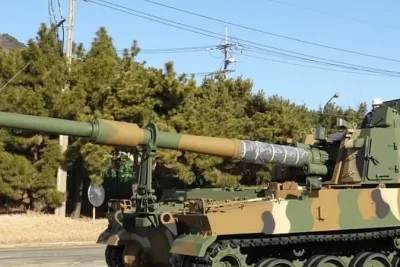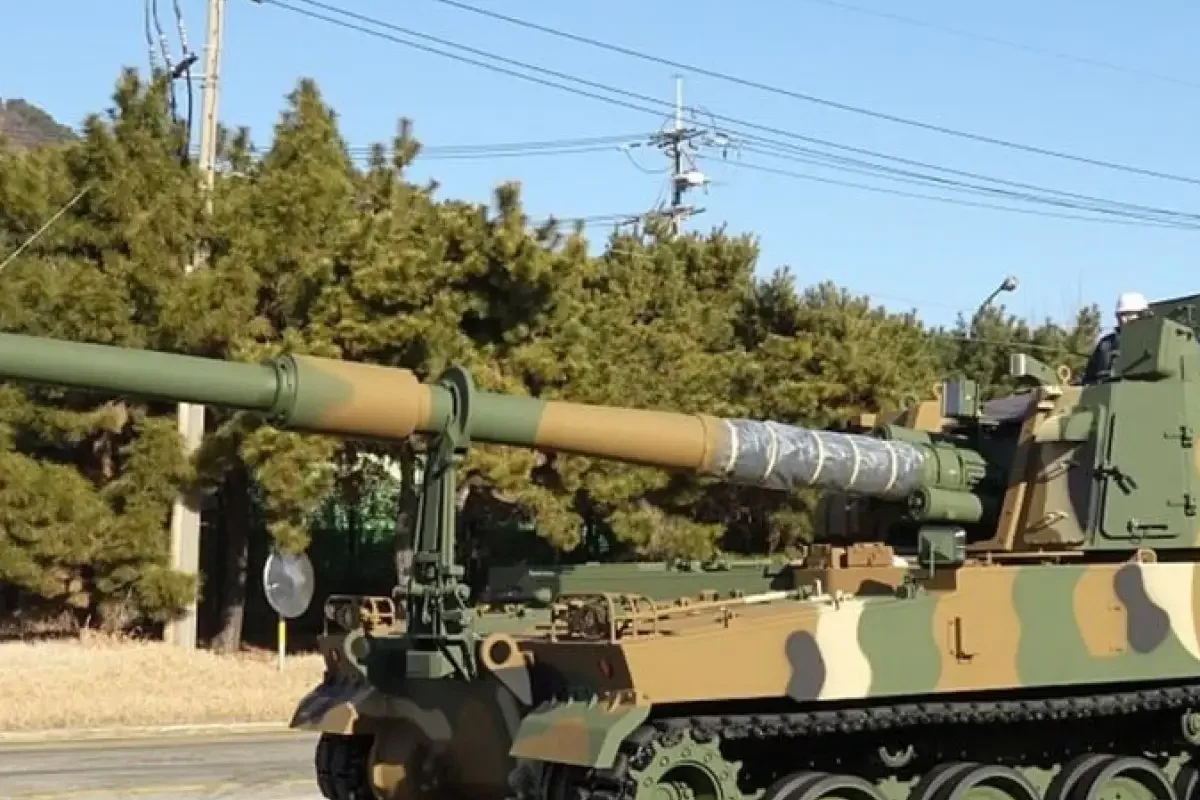
South Korean defense company Hanwha announced a partnership on June 1, 2026, to use steel from Algoma Steel's Sault Ste.
Marie plant to manufacture armored military vehicles in Canada if it wins the nation's next-generation submarine contract.
>>> Iowa Gunman Kills Six Relatives, Then Himself in Domestic Dispute
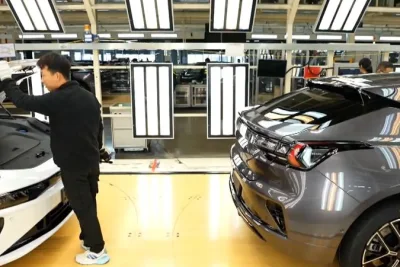
The agreement builds on an April memorandum of understanding with the Automotive Parts Manufacturing Association (APMA) to establish a consortium called Project Arrow Defense, which would feature 51 percent Canadian ownership to produce five types of military ground vehicles.
Top South Korean officials, including Presidential Special Envoy Kang Hoon-sik, attended the signing at Martinrea International in Vaughan, Ontario.
"This partnership is significant because it seeks to establish a complete Canadian supply chain — from raw materials and components to final vehicle production — entirely within Canada," said Kang Hoon-sik.
The South Korean government stated that this collaboration will support Canada's industrial sovereignty, national security, and job creation while directly responding to federal requests to assist local automotive and steel sectors.
Flavio Volpe, President of the APMA, highlighted the economic impact: "The economic activity that comes from that deal is the equivalent of one new car plant here.
That means 15,000 direct jobs through the supply chain and another 15,000 indirect."
The Canadian Armed Forces requires 250 armored vehicles for Arctic deployment and NATO duties, and Project Arrow Defense could also manufacture weapon systems for Hanwha's global customers who have ordered thousands of vehicles.
Volpe noted the timing is crucial given tariff challenges: "At a time when we’re down 30 per cent in auto manufacturing in this country because of tariffs from Washington - that’s very important."
The high-level South Korean delegation emphasized that their presence signals a serious, long-term commitment to working alongside Canadian enterprises in defence manufacturing.
Algoma Steel previously signed an MOU for Hanwha to purchase its products and receive a low-interest loan to convert its facility to produce steel beams, making it the sole domestic producer of ballistic-grade steel.
"It’s a great opportunity to be part of a consortium that will respond to Canada’s national priorities around defence spending," said John Naccarato, Vice-President of Strategy at Algoma Steel.
>>> London Braces for Thunderstorms After Record-Breaking May Heatwave
Submarine Contract Competition
Prime Minister Mark Carney stated that the government will select the winning submarine bidder by the end of June, ahead of the July 1 Canada-U.
S. -Mexico trade agreement review.
Hanwha is competing against Germany's Thyssenkrupp Marine Systems (TKMS), which is pitching its Type 212CD submarine and recently signed a collaboration agreement with Canadian simulator firm CAE.
"Modern naval operations require highly adaptive training environments that evolve alongside emerging threats," said Oliver Burkhard, CEO of TKMS.
The German bid includes economic benefits projected to increase Canada's GDP by more than $86 billion over the submarine lifespans, alongside a recent German agreement to purchase one million tonnes of Canadian liquefied natural gas.
South Korea countered with a proposal to import 3.4 billion tons of Canadian LNG annually, expanding its current intake more than fivefold.
Defence Minister David McGuinty indicated that the government prefers not to divide the 12-submarine procurement between competitors, though it remains a complex possibility.
"I don’t know if you can categorize the safe decision being splitting it down the middle.
I think what we’re looking at here is making sure we have a fleet that is interoperable, that is international and that can be serviced appropriately," said McGuinty.
The federal government is currently investing billions into retrofitting submarine bases in Esquimalt and Halifax, which would face operational challenges if the fleet were divided.
>>> Los Angeles Housing Crisis Persists Despite Significant Population Loss
"Splitting the fleet would make it more complicated… but it’s not impossible," said McGuinty.