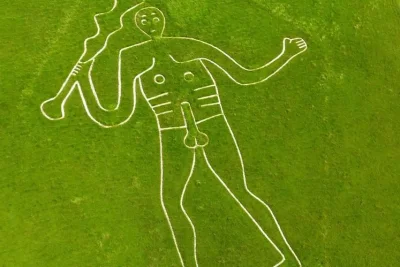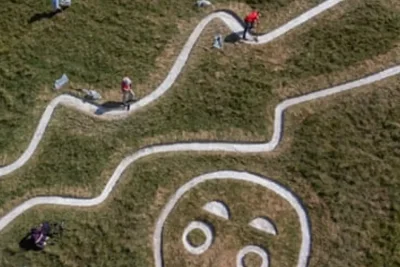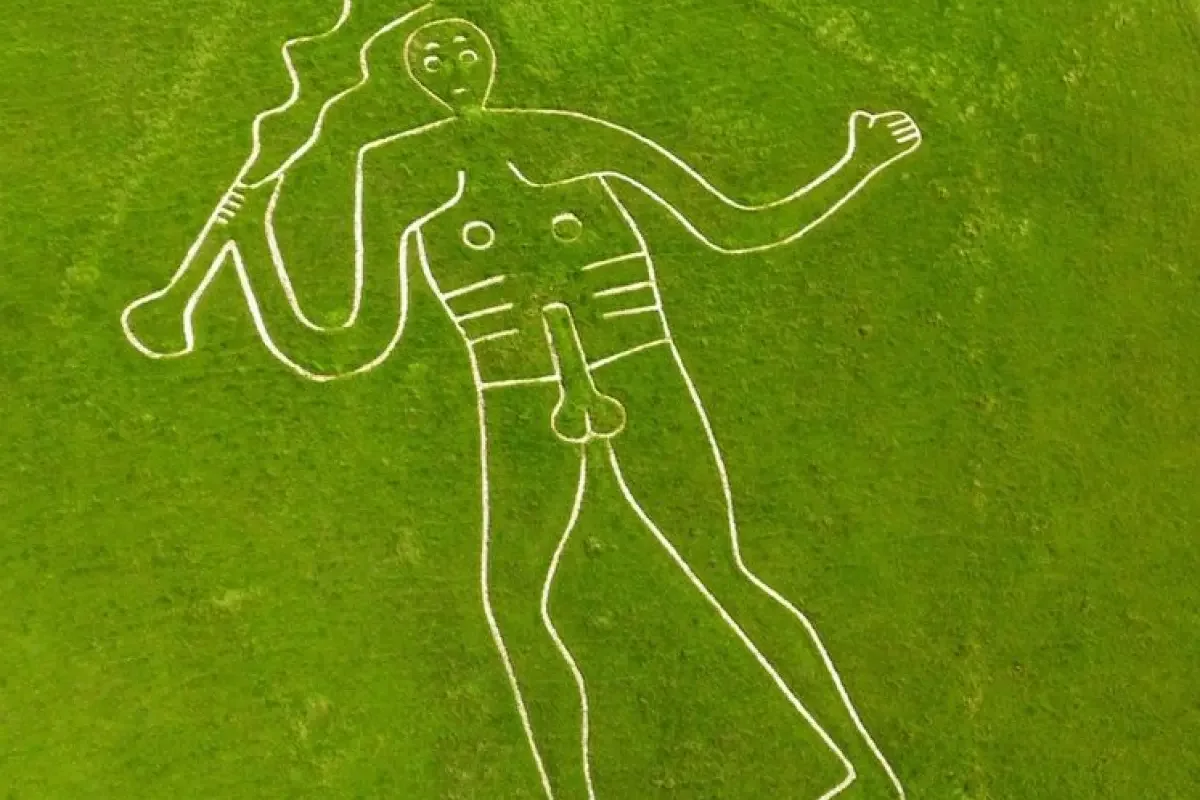
The National Trust began a major restoration of the Cerne Abbas Giant in Dorset on Thursday, May 28, 2026.
Workers are spreading 17 tons of fresh chalk across the 180-foot historic hill figure.
>>> Southern Water Faces Backlash Over Eastbourne Discharge, Deploys Leak Detection Dogs
Conservation teams moved the scheduled maintenance forward from its traditional September timeline to May.
The shift aims to mitigate the impacts of increasingly wet summer weather that accelerates weed and algae growth on the landmark.
Staff and volunteers allocate roughly 300 hours every decade to preserve the site. The site has been under National Trust management for over a century.
The renewal process requires heavy manual labor due to the steep one-in-three gradient of Giant Hill.
Luke Dawson, a lead ranger at the National Trust, explained the urgency of the intervention due to environmental changes on the hillside.
"We want to keep on top of it because we’re seeing that it’s starting to overgrow a lot more and fade," Dawson said.
"It’s something that people have travelled from all over the country to come and see, and the world even in some instances."
The preservation strategy begins with cattle grazing to clear surrounding vegetation. Rangers then use spades to redefine the outline.
Workers must pack the chalk tightly by hand to safeguard the structure against water erosion and invasive slime.
Dawson noted that intense rainfall previously disrupted restoration efforts, prompting the testing of a new water-chalk mixture that mimics plaster of Paris.
>>> Met Office Forecasts Intense Thunderstorms as Record May Heatwave Ends
"The erosion was in part because of that September rain," Dawson said. "With the algae, it’s one that we just can’t predict."
"If that algae does not get killed off over winter, coupled with the fact that we’re getting wetter summers, it just promotes that algal growth in damp conditions," he added.
"Rather than a nice white chalk sheen, you are getting a dull grey-green kind of sheen like slime, so it’s something we have got to constantly check."
While local historical records only trace the monument back to the 17th century, carbon dating conducted in 2021 verified its origins between 700 and 1100 AD.
The gap in documentation has fueled various archaeological theories regarding its visibility over the centuries.
Scott Welland, the visitor, operations and experience manager at the National Trust in West Dorset, addressed the historical gap surrounding the monument.
"One theory is that during that period, the grass grew back," Welland said.
"So maybe during that period he disappeared and no one was aware that he was there until that 1600s period."
"But we still don’t know why he’s there and why they created him and that’s a mystery," he added.
The conservation work follows a successful fundraising campaign in February that secured ownership of 340 acres of surrounding land.
>>> Oakridge Park Opens 500,000 Sq Ft Retail Hub in Vancouver
The initiative raised £330,000 within 60 days to safeguard local wildlife habitats, including the Duke of Burgundy butterfly.