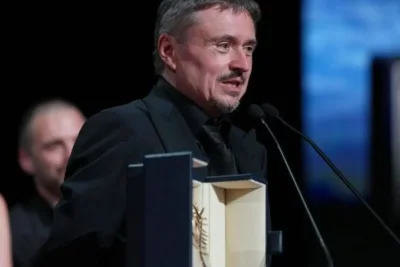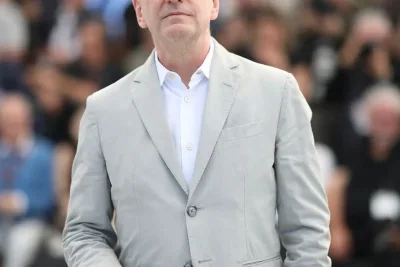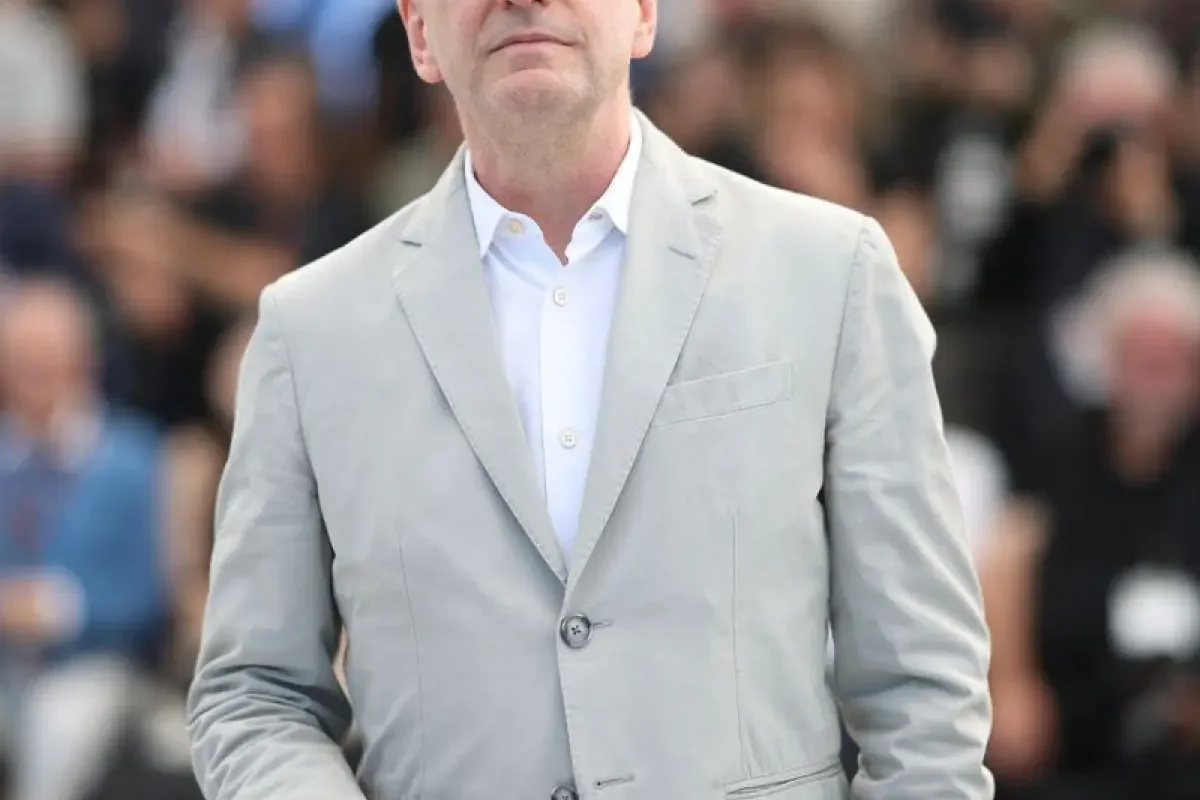
Director Steven Soderbergh presented his new documentary, John Lennon: The Last Interview, in a special session at the Cannes Film Festival on May 18, 2026.
The film incorporates controversial AI-generated visuals to accompany a historic radio interview.
>>> Rain and Cooler Temperatures Arrive in Philadelphia Region
It centers on a two-hour and 45-minute conversation that John Lennon and Yoko Ono recorded with San Francisco's KFRC radio station at their New York apartment on December 8, 1980.
That was just hours before Lennon was shot dead by Mark David Chapman.
Soderbergh structured the documentary to respect the chronology of the recorded conversation.
He combined the audio with archival footage, more than 1,000 family estate photos, and interviews with the original journalists and radio staff.
To illustrate abstract and philosophical segments that lacked archival imagery, which comprised about 10% of the runtime, Soderbergh partnered with tech giant Meta to generate surrealistic visual sequences.
Director's Reflections on the Project
"How little we expected," said Soderbergh, reflecting on his 1989 Cannes debut with Vanity Fair.
"We slipped into the competition because of another film dropping out, so it all just felt like pure upside."
The director recalled his initial reaction to hearing the full, unedited archival tape of the final interview session.
"It really felt like the creative equivalent of finding this Spanish galleon sunken off the coast of wherever and it's filled with, like, gold coins," said Soderbergh.
"I just couldn't believe it."
The filmmaker expressed a desire to put the focus entirely on the couple's raw dialogue rather than imposing external interpretations.
"Because it wasn't a take on them—it was them," said Soderbergh.
"That's what appealed to me about it; my job here is to just put this thing on a plinth and shine a light on it so that people go, Wow.
You really feel like you close your eyes, you're sitting next to them.
There's this sense of freedom that they had, which I think was probably driven by two things: They're in their home and they trust these people that they're talking to."
Addressing the visual gaps in the abstract parts of the interview, Soderbergh described the operational constraints and the transition to Meta's technology.
"There were these blank spaces where there was nothing archival that didn't take abstract ideas and make them literal, which would violate the whole idea of talking in abstract terms," said Soderbergh.
"We started with the readily available versions of the video-generative technology to see, like, what is this going to look like?
What should it look like? And we kind of had a version of it, but we were out of money and time.
And that's when [Soderbergh's manager] Michael Sugar called and said, 'I've been talking to these people over at Meta.
I think you should talk to them.' Not only because they're expressing interest in content, but they've got some tools.
I was aware of the position that I was putting myself in by saying yes to them, but I was comfortable with that in the sense that I want to know what's possible."
Soderbergh acknowledged that using generative artificial intelligence would position him as a prominent figure in ongoing industry debates.
>>> The Mandalorian and Grogu: Unmasked Din Djarin and Sigourney Weaver Join Star Wars
"A little bit, but not in a serious way, and this was a way to get really serious," said Soderbergh.
"But I knew I was going to become a sort of de facto—spokesperson is the wrong word, but I'm going to have to wear this.
I'm going to be expected to speak for them or about this technology. That's the trade-off to make the best version of this.
And so that's the trade-off that I have to accept, because I owe people the best version of it and I owe Sean that."
He emphasized the importance of engaging in open dialogue regarding tech conglomerates and creative ethics.
"I don't mind having conversations about the role of this technology, the role of companies that have become bigger than any companies ever on this planet and what that means and what their obligations are," said Soderbergh.
"I like talking about it because I feel that's the only way to figure this out.
In Hollywood, there's a lot of fear and emotion about this new technology.
I think you have to be more conscious about the specific context of creativity, as opposed to politics, war, and these other things.
And then there's this open question of, can you separate any of that stuff?
If the same companies that are making tools for creative people are also figuring out how to target locations in a foreign country for us to launch missiles, there's a reason that we're all walking around feeling anxious."
Soderbergh noted that directors frequently monitor each other's public commentary on technology rather than debating directly.
"A little bit," said Soderbergh.
"There's a significant quotient of this very modern thing of us all communicating with each other through the press, as opposed to actually talking to each other.
I think we all get a lot of, 'Did you see what Guillermo [del Toro] said?'
I know Guillermo, and at some point I should probably just talk to him. I'm good whatever way you're going to go.
I'm a believer in exploration.
I want to get to whatever the new reality of this is as soon as possible so that"
Soderbergh also detailed the production process and the involvement of the Lennon family during an interview with El Pais.
"We met with Sean Lennon and he trusted us," said Soderbergh.
The director noted the unexpected transparency displayed by the couple during the historical recording session.
"I was surprised at how open and excited they were to talk," said Soderbergh.
"You would think they had never been interviewed before."
>>> Paul McCartney and Ringo Starr Release First Official Vocal Duet 'Home to Us'
Soderbergh concluded that the core themes discussed by Lennon and Ono carry significant contemporary weight.