The Leatherhead Lions Club canceled its scheduled donkey racing and dog show at the annual bank holiday event in Surrey on Monday.
Organizers called off the traditional activities due to severe animal welfare concerns sparked by a record-breaking regional heatwave.
>>> East Midlands Airport Evacuates Terminal Over Suspicious Luggage
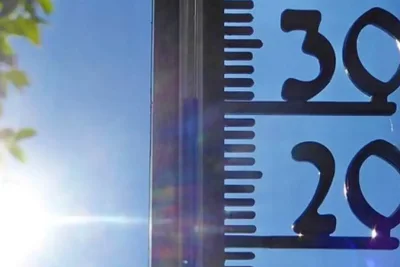
According to forecasts from the Met Office, Monday was expected to become the hottest May day ever recorded in the United Kingdom.
Parts of the nation faced temperatures climbing to 34C, while Leatherhead specifically braced for a peak afternoon temperature of 33C.
A spokesperson for the event stated that the venue would remain open despite the cancellation of the animal events.
The official confirmed that families could still attend other planned festival attractions, including live music and fairground rides.
The record-setting temperatures coincide with historical milestones for the Met Office, an institution once led by Sir George Clarke Simpson.
Simpson, who served as the director of the London Meteorological Office between 1920 and 1938, pioneered modern weather forecasting techniques.
Before his leadership at the Met Office, Simpson joined Captain Robert Falcon Scott's 1912 Antarctic expedition to establish early polar weather stations.
His initial climate predictions were later validated by modern meteorologists as entirely accurate for standard seasonal cycles.
During his early observations in November 1911, Simpson documented severe anxieties regarding the unpredictable polar environment before Scott's team departed for the South Pole.
"It appears that with all our resources, there is little margin, and a few accidents or a spell of bad weather would not only bring failure, but very likely disaster," said Simpson, Imperial Meteorologist.
The polar party subsequently perished in severe weather conditions after Norway's Roald Amundsen reached the South Pole first.
Simpson returned to Britain via India and detailed the operational performance of the expedition to the Derby Telegraph in June 1912.
"We lived a very happy life together and I should think it was one of the most happy expeditions that ever went out," said Simpson.
>>> Amber Heat Alert Grips Nottinghamshire as Temperatures Reach 33C
Local fundraising efforts in Derby had directly purchased the advanced technological instruments used during the historic expedition.
Simpson emphasized that the equipment allowed his team to amass unprecedented atmospheric data from the upper atmosphere using specialized balloon systems.
"Everyone pulled together splendidly, and we got through our work well.
The plans we made for the expedition were carried out with very little alteration, but of course, they had to be altered a little to meet unforeseen difficulties," said Simpson.
The specialized weather instruments functioned continuously throughout the polar deployment despite the extreme environmental shifts.
Simpson noted that the attached monitoring devices successfully liberated via time fuses to gather data across the ice fields.
"The instruments which were purchased out of the Derby fund all behaved splendidly, and were thoroughly used.
In consequence, a large amount of data has been amassed, which has never been obtained by other expeditions," said Simpson.
By the aid of small balloons, Simpson investigated the upper atmosphere to determine how temperature varied during the year.
He later established the Simpson wind force scale in 1926, which remains the global standard adaptation of the Beaufort scale.
"By the aid of small balloons, I was able to investigate the upper atmosphere, and find how the temperature varied during the year.
These small balloons were sent up and they had attached to them little instruments that were liberated by means of a time fuse, and fell upon the ice," said Simpson.
Simpson continued atmospheric electricity and thunderstorm research at the Kew Observatory through World War II until 1947.
>>> Glasgow Airport Runway Closed After Small Aircraft Incident
In 2014, local officials installed a digitally tagged Blue Plaque at his childhood home on East Street to commemorate his meteorological contributions.