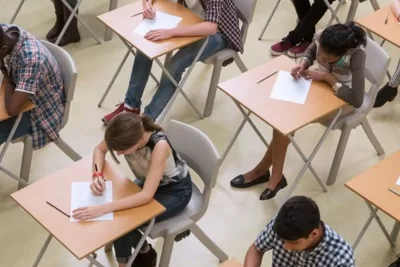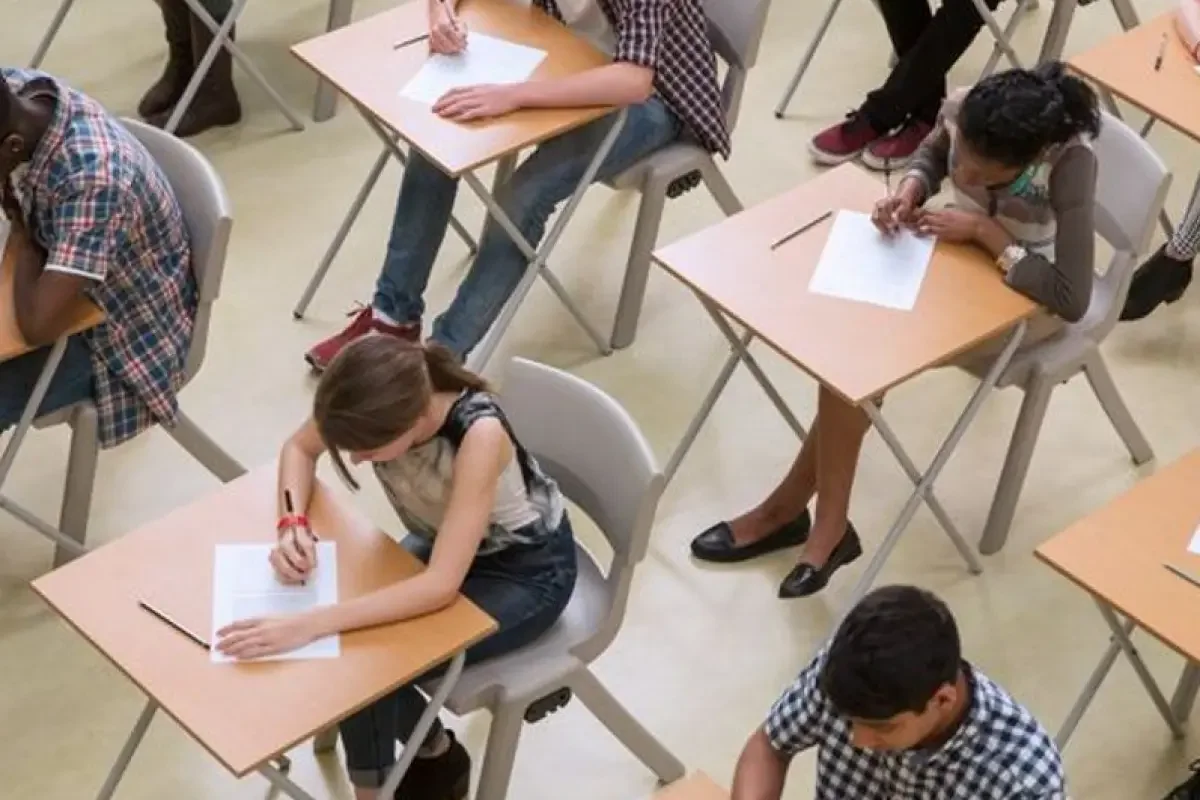
Thousands of students have launched a protest following an exceptionally challenging Pearson Edexcel A-Level Mathematics Paper 1 exam administered on Wednesday, June 3, 2026.
A petition garnered nearly 20,000 signatures in less than 24 hours, demanding an immediate difficulty review and adjusted grade boundaries.
>>> Australian Racing Driver Joey Mawson on Trial for Alleged Assault of Schumacher Nurse
England's exams regulator, Ofqual, confirmed it is closely monitoring the marking process to ensure fairness.
Petition Calls for Fairness
The petition organizers stated that the movement does not aim to avoid performance accountability.
Instead, it seeks fairness regarding the unusual level of difficulty presented to candidates who spent two years preparing for the test.
"This petition is not an attempt to avoid accountability for performance, nor is it an assertion that examinations should be made easier," the wording states.
The text notes that the paper caused widespread distress among students and educators across various colleges.
"Rather, it is a request that Pearson Edexcel examine whether the level of challenge presented by this paper was proportionate and whether grade boundaries should be adjusted accordingly to ensure fairness for all candidates," the petition added.
The organizers emphasized that the candidates made significant personal sacrifices to achieve their academic goals over the past two years.
"Across schools and colleges, students who consistently achieved high grades in mock examinations, past papers, and classroom assessments reported leaving the examination hall feeling uncertain and overwhelmed," the petition stated.
The document explains that the complications were widespread rather than confined to the final questions.
"Many students felt that questions required multiple layers of reasoning, extended algebraic manipulation, and unfamiliar approaches beyond what had typically been expected in previous examination series," the petition said.
Student Reactions
Several students shared their personal struggles in the comment section of the petition, describing severe emotional distress during and after the examination.
"Walking out that exam hall, I couldn't feel any of my senses, couldn't see properly because of the tears rolling down my face, couldn't hear properly because of the trauma warping my hearing," wrote Yahya, a commenter on the petition.
The candidate expressed immense frustration after spending a significant period preparing for the test paper.
"All I could feel was sadness and rage. I [spent] what felt like my entire life preparing for this exam.
But nothing could have prepared me for whatever the devil wrote on those pieces of paper," Yahya added.
Other candidates shared similar sentiments regarding the hostile nature of the examination environment.
"a war crime", wrote Eric, another commenter.
Students expressed severe dissatisfaction with the question structures encountered during the assessment.
"wouldn't wish this on my worst enemy", said Jessalyn, a third commenter.
Candidates compared the paper to historic decoding challenges and noted severe anxiety responses.
"This was not a paper. This was a war zone.
In fact, the Enigma code was easier to crack than some of those questions," Yuri wrote.
Another candidate reported becoming entirely incapacitated during the final section of the exam window.
"Had an anxiety attack in the exam hall for the last 30 minutes, so I couldn't even write anything," Phoebe added.
Peer observations highlighted the visible impact of the assessment on the candidates leaving the venue.
"My friend walked out that exam hall a shell of the man he was before entering it. #MakeMathsEasier," Wesley wrote.
Parents also expressed deep concern regarding the potential long-term academic consequences for their children.
"It cannot be right that so many students were distressed during and after the exam and now feel that their university places are at risk," writing Denise.
The petition text continued to emphasize that student grades must reliably reflect true capability rather than an anomalous exam format.
"Many students have dedicated countless hours over two years to preparing for these examinations," the petition said.
The organizers highlighted the extensive independent study and classroom sessions completed by the cohort.
"They have attended lessons, completed extensive independent study, worked through past papers, attended revision sessions, and made considerable personal sacrifices in pursuit of their academic goals," the document noted.
The petition concluded by requesting reassurance that the ultimate outcomes would be fair.
"These students deserve confidence that their grades will reflect their mathematical ability rather than the unusual difficulty of a single examination paper," it added.
Teacher and Expert Reactions
YouTube mathematics teacher Bicen Maths released a reaction video validating the students' concerns regarding the paper's difficulty.
"Wow, that was a tough paper," said Bicen Maths.
The educator pointed out that the presence of messy numbers and a lack of standard verification questions complicated the exam pacing.
"I think it was a tough paper. There were some tricky questions in there.
I think the pacing was quite hard but really my overall thought on this was all of the numbers were really messy," Bicen Maths added.
He noted that a difficult proof question at the conclusion of the test created further complications for candidates.
"A couple of years ago, there was a load of 'show that questions'.
>>> IndiGo Reduces Flight Frequencies on Key International Routes for Q3 2026
I think there were barely any 'show that' questions and when there was, they was always an unknown with it so you never really knew if you'd got the answer right.
Proof question at the end very very tough.
Just the numbers were so messy and I know that would have thrown a lot of people off," Bicen Maths observed.
He concluded that the general reception to the paper has been overwhelmingly negative across the board.
"Everybody who came out of the exam had a really similar feeling.
Normally you can tell how people found it and it has not been a very positively received exam so far," Bicen Maths said.
Students responding to the video shared their personal shortcomings and relief at the collective consensus.
"i only got my name right," said one viewer of his reaction video.
Another student expressed relief that the feeling of failure was shared globally across the cohort.
"It brings me so much comfort that everyone found it difficult. At least I know I am not the only one," another added.
A third student noted that the educator's evaluation validated their group's internal sentiment.
"If bicen said it was a tough paper then we all cooked," said a Maths student.
Candidates continued to joke about their performance and the harsh nature of the test parameters.
"Glad I wasn't overreacting this paper felt like it came straight from hell," added a pupil.
One student joked that their writing might only serve to entertain the individuals grading the sheets.
"Couldn't tell if i was writing because I wanted to get a good grade or make the examiner laugh," another student said.
A parent inserted a supportive note to remind the candidates of their inherent capabilities.
"Im a parent reading these comments.
I want you all to remember how amazing and clever you all are, just for studying A-Level maths in the first place," a mum or dad made the good comment.
Pearson and Ofqual Respond
In response to the growing backlash, the examination board stated that the grading boundaries would adjust dynamically if data proves the test was anomalous.
"We know this is an intense time for students and are committed to ensuring a fair exam experience for all candidates.
Every paper is developed with input from experienced senior examiners and rigorously checked to ensure it reflects the course and meets required standards.
If a paper is found to be more difficult than previous years, grade boundaries will be set to reflect that," said a spokesman for Pearson.
The representative explained that multiple streams of data guide the eventual finalization of student results.
"When setting grade boundaries, we review a range of evidence, including statistical data and expert judgment.
This process ensures students receive results that fairly reflect their performance and are comparable across exam series," the spokesman added.
Pearson spokesperson Caroline Darrington repeated the board's commitment to baseline course standards and proportional adjustment practices.
"Every paper is developed with input from experienced senior examiners and rigorously checked to ensure it reflects the course and meets required standards," said Caroline Darrington, a spokesperson for Pearson.
She reiterated that grading mechanisms automatically account for shifts in annual paper difficulties.
"If a paper is found to be more difficult than previous years, grade boundaries will be set to reflect that.
When setting grade boundaries, we review a range of evidence, including statistical data and expert judgment," Darrington added.
She finalized her statement by noting that historical comparability remains a core focus during evaluation.
"This process ensures students receive results that fairly reflect their performance and are comparable across exam series," Darrington stated.
The regulatory authority confirmed its direct involvement in ensuring that final scores accurately match student comprehension.
"Our priority is students and ensuring their grades are a reliable indication of what they know, understand and can do," the watchdog told the Press Association.
Separately, Ofqual chief Sir Ian Bauckham highlighted unrelated concerns regarding examination malpractice involving digital accessories as over one million pupils sit summer exams.
"mobile phones are not the only devices students can use to cheat," said Sir Ian Bauckham, Ofqual's chief.
He warned about evolving technologies that could eventually facilitate illicit assistance inside testing halls.
"There are of course other devices, there are smart watches and smart all sorts of things," Sir Ian added.
The regulator concluded by describing potential future gadgets that invigilators must look out for.
>>> Scientists Complete Autopsy of Humpback Whale on Danish Island Amid Explosion Risk
"There might be smart spectacles next… that will play text across the inside of the lens that only the student can see," Sir Ian said.