University of Colorado Boulder researchers announced on June 1, 2026, that a rare meteorite recovered from the Sahara Desert provides the first definitive evidence of a long-lost protoplanet that existed 4.5 billion years ago.
The study, analyzing the space rock labeled Northwest Africa (NWA) 12774, will be published in the journal Earth and Planetary Science Letters on July 1, 2026.
>>> Military Investigators Probe Royal Navy Helicopter Crash in Devon
Discovered in 2019 within Mauritania, the one-pound rock belongs to a highly scarce class of volcanic space rocks known as angrites, according to reports by space.
com and nautil. us.
Out of more than 80,000 meteorites found on Earth, only 68 are identified as angrites, which are characterized by an unusually low abundance of silicon dioxide compared to Earth or Mars.
Geochemical Clues Point to a Massive Parent Body
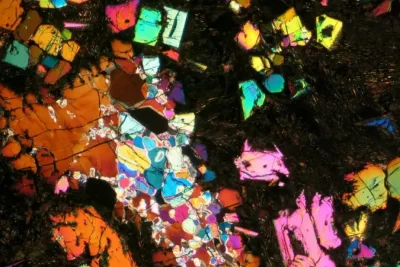
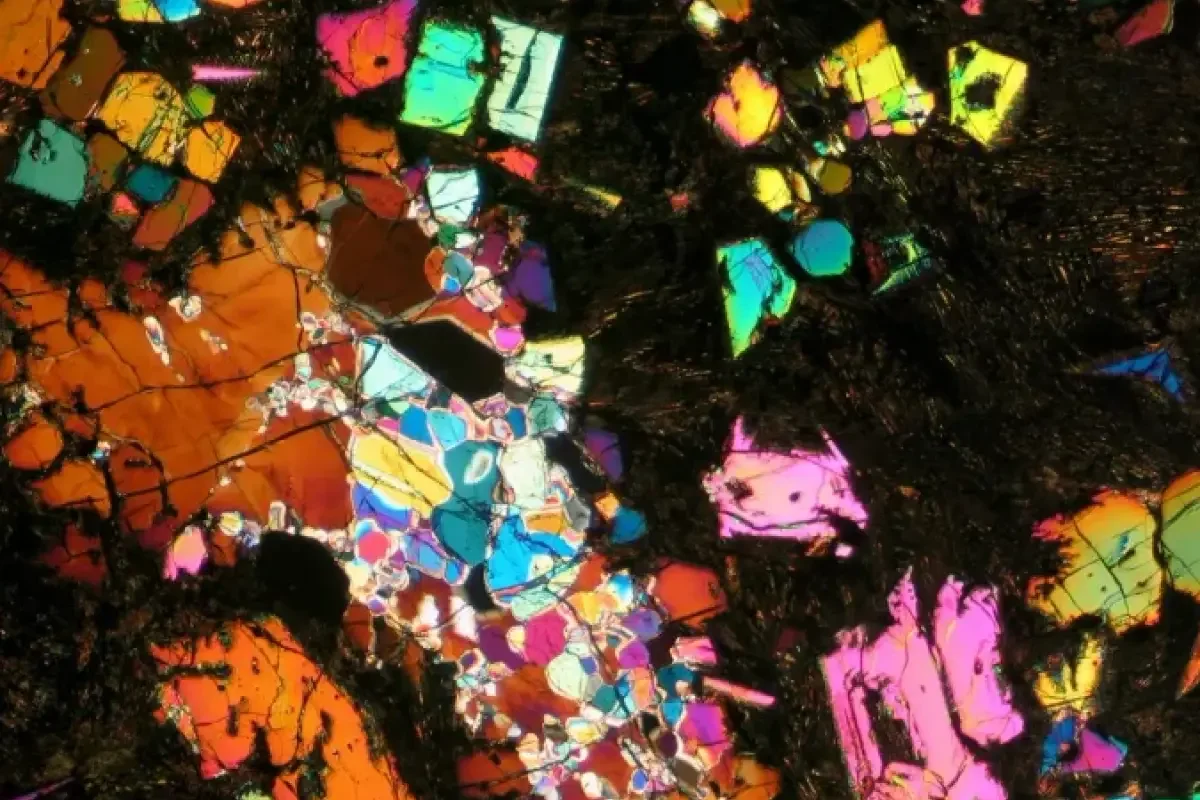
Geochemical testing revealed that the space rock contains aluminum-rich clinopyroxene crystals, a mineral indicating that the material formed under immense pressure of at least 17.5 kilobars.
This pressure level is more than 17 times greater than the pressure found at the bottom of the Mariana Trench, the deepest point on Earth.
Because a small asteroid could not generate such extreme pressure, researchers calculated that the original parent body must have had a radius exceeding 1,118 miles, making it comparable to the size of Earth's moon or Mars.
The preservation of sharp crystal edges and delicate chemical patterns further indicated that these minerals formed at shallow depths, requiring an even larger planetary body to achieve such high surface-level pressure.
Scientists suggest the ancient protoplanet was likely destroyed in a violent cosmic collision during the chaotic early formation of the solar system, with its remaining fragments eventually colliding with other growing planets.
>>> USDA Confirms First New World Screwworm Case in Texas Cattle Since 1960s
"The materials that formed the angrite parent body are fundamentally different from the ingredients of Earth and Mars," said Aaron Bell, study lead author and geoscientist at the University of Colorado Boulder.
Bell noted that the unique space rock preserves data from an entirely separate evolutionary track in early planetary development.
"These meteorites preserved evidence of a completely different pathway through which early planets developed," Bell said.
The team emphasized that a significant portion of early solar system history might still be waiting to be uncovered in existing geological collections.
"It's incredible to think there was once a world this large," Bell said.
The researchers suspect that additional hidden protoplanets could be identified by re-examining other stored samples.
"We only know it existed because a few fragments of it happened to land on Earth," Bell said.
Scientists intend to continue analyzing rare meteorites to better map out the violent history of the early solar system.
>>> Bayeux Tapestry to Be Loaned to British Museum in Historic 2026 Exhibition
"There are many meteorites sitting in drawers that haven't been thoroughly studied, so there were likely more of these protoplanets we don't know about," Bell said.