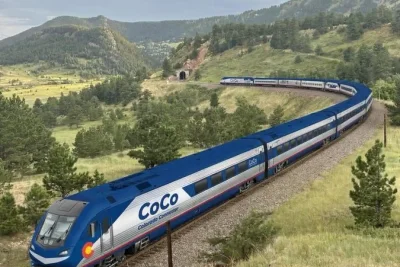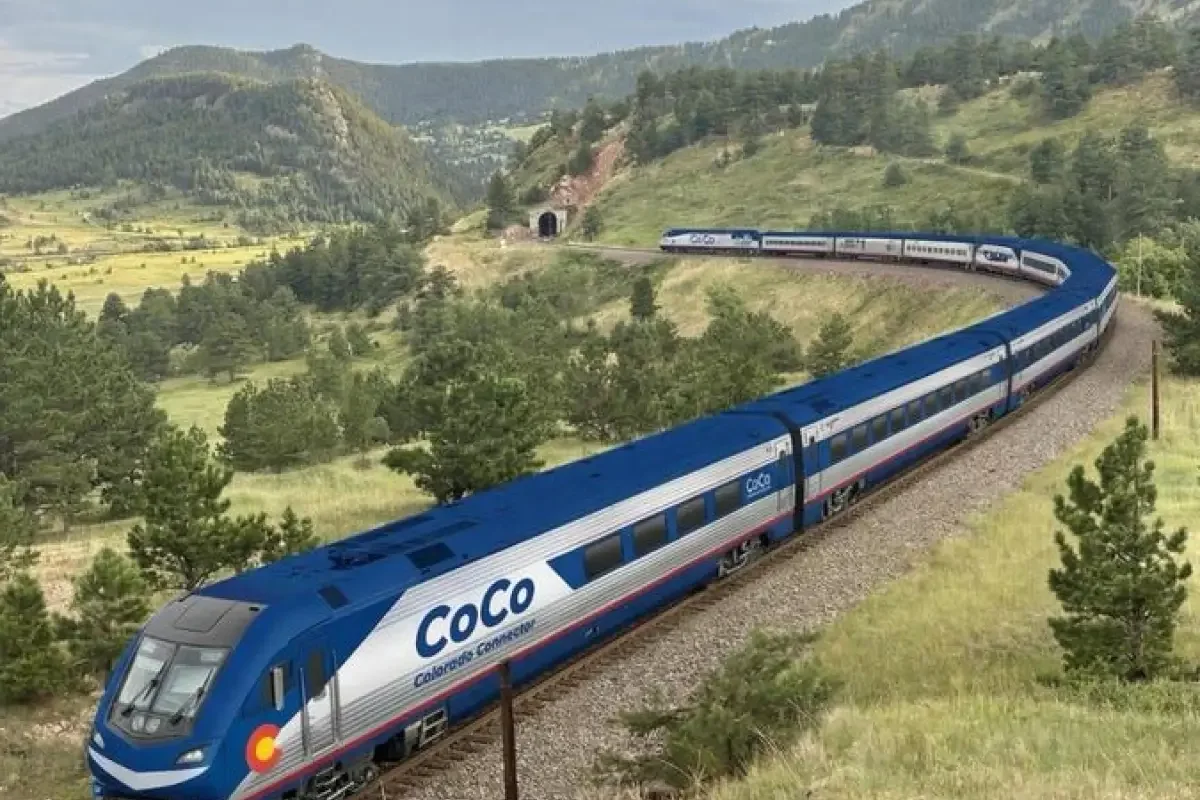
The Front Range Passenger Rail District and Fort Collins officials have advanced development plans for the Colorado Connector passenger rail service, confirming a preferred station location at the Drake MAX bus stop during a city council meeting on May 26, 2026.
The state-run rail project, also known as CoCo, aims to establish a transit link between Denver and Fort Collins by January 1, 2029, featuring eight stops and three daily round trips operating seven days a week.
>>> National Grid Proposes £4.5 Billion Investment, Launches Customer Events
Local enthusiasm for the transportation alternative remains significant as traffic congestion intensifies on regional highways, according to Fort Collins Senior Transportation Planner Seth Lorson.
"People are very excited about the train," Lorson said. "All you have to do is have one trip down [Interstate 25]."
During the municipal proceedings, regional representatives fielded logistical questions regarding train accommodations from local council members, including whether bikes would be allowed on the trains, to which district representatives responded affirmatively.
The chosen site near South College Avenue was prioritized by project planners due to its central location and compatibility with existing rapid transit infrastructure.
"What's great about the Drake station is that it's centrally located," Lorson said. "It's also along the MAX, our bus rapid transit."
An unscientific poll conducted by the Coloradoan revealed that 55 percent of over 1,000 respondents favored the Drake Station, followed by 32 percent supporting the Downtown Transit Center.
However, some local representatives expressed concern that the chosen site sits approximately two miles away from the primary historic commercial district.
"Old Town is what people come here for," said Fort Collins City Councilmember Anne Nelson.
"So a station that's two miles away, connected by MAX is workable, but it's not the same as arriving in the heart of the city."
Project planners explained that alternative locations presented severe spatial limitations and prohibitive structural hurdles.
"I completely understand," Lorson said. "Old Town is our historic transit depot.
When we did an analysis of it, we didn't feel that physically the train could fit there.
In fact, we would probably have to take out an entire building in downtown to be able to fit the platform."
Altering the station site would mandate renegotiating formal agreements with the Burlington Northern Santa Fe Railroad and securing massive municipal funding.
>>> Florida Authorities Investigate Death of Parris Island Drill Instructor
"There would need to be a lot of money found that we are not bringing to the table right now.
There would also have to be new agreements signed with [Burlington Northern Santa Fe Railroad]," said Sal Pace, General Manager of the Front Range Passenger Rail District.
The Drake Station recorded the highest score among seven potential sites evaluated on criteria such as ridership potential, environmental impacts, and land compatibility.
According to Colorado Department of Transportation rail and transit planner Joan Lyons, building further north would drastically increase crossing improvement expenses.
The broader project also includes an initial $333 million segment connecting Denver to Boulder, which carries an estimated $30 million in annual operating costs.
To support public awareness ahead of a November funding election, the Regional Transportation District board agreed on May 27, 2026, to provide $3 million for informational outreach.
While some board members opposed the spending due to a major agency budget deficit, supporters emphasized fulfilling long-standing transit commitments.
"I do not see how we could possibly pay for this without more cuts than what is already on the table," said JoyAnn Ruscha, RTD District B Director.
The marketing funds serve as a bridge loan that the rail district intends to repay using revenue generated from the successful passage of the upcoming ballot measure.
"We believe RTD's expanded partnership and investment in FRPRD will render clear benefits to RTD and to the traveling public we share.
Advancing Front Range Rail will expand regional mobility, strengthen connections to RTD's system, and create new opportunities for integrated service across the entire Front Range," wrote unnamed Front Range Passenger Rail officials.
The promotional funding allocation supplements $3 million previously secured from state resources restricted from marketing applications.
A preliminary term sheet indicates that the regional transit district may eventually contribute up to $156 million toward the construction of the Boulder segment.
Future development phases intend to expand the rail corridor further north to Fort Collins and south toward Pueblo and Trinidad.
>>> USDA Monitors Flesh-Eating Screwworm Case 25 Miles from US Border
"Looking forward to also loosening congestion on I-25 and reducing our pollution," Lorson said.