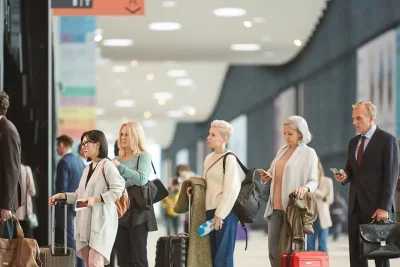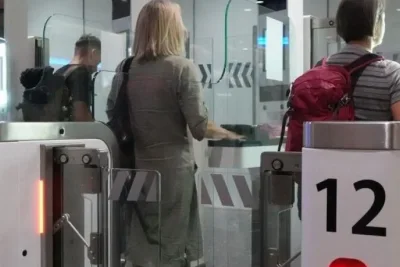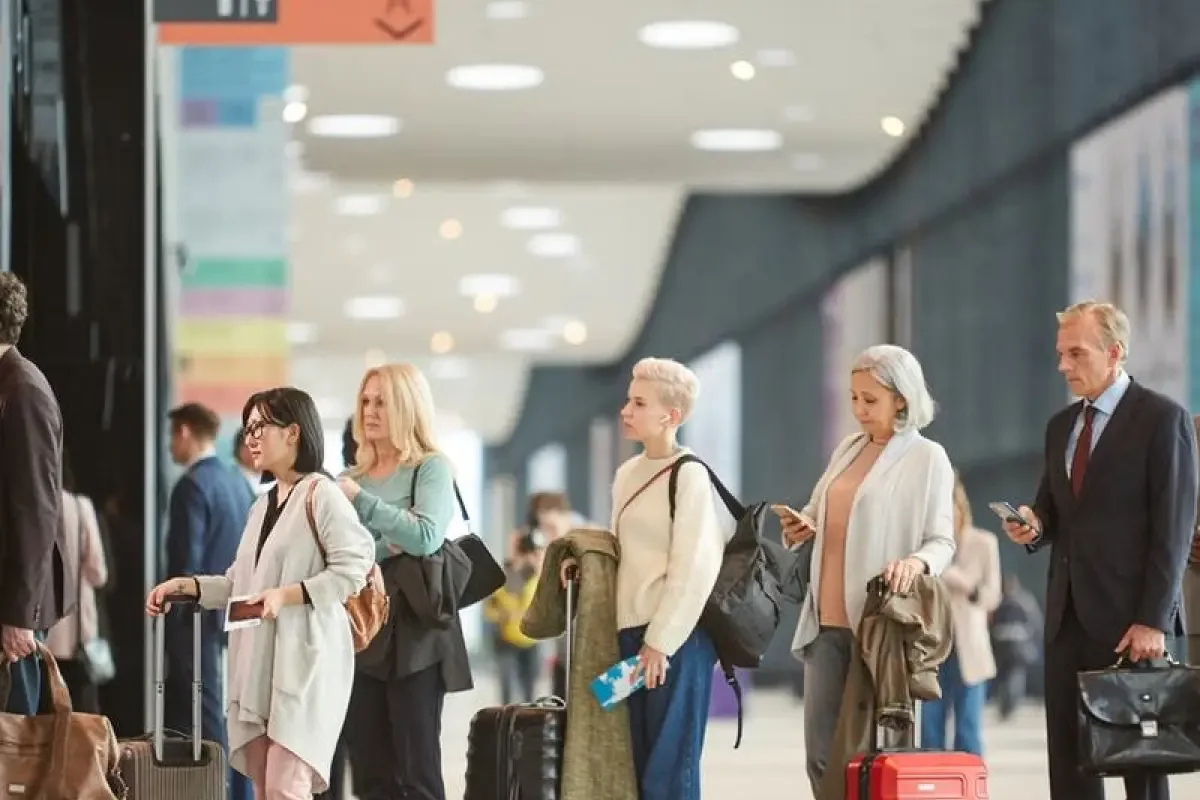
British travelers are experiencing border queues of up to six hours at European airports following the full rollout of the European Union Entry/Exit System (EES) biometric checks.
The International Air Transport Association (IATA) warned that the digital border management system poses a severe risk of flight disruptions and significant financial losses for tourist destinations.
>>> Drug Gangs Seize Hundreds of UK Homes Weekly in Cuckooing Epidemic
The EES applies to all third-country nationals entering the Schengen Area, requiring fingerprints and facial biometrics upon first entry.
Delays and missed flight connections have already emerged across Portugal, Spain, Italy, France, the Netherlands, and Switzerland.
The implementation of biometric checkpoints has significantly increased passenger processing times. At Milan Linate airport, 122 easyJet passengers missed their flight to Manchester due to technical delays.
“What we are seeing is a very hard risk of really challenging times or waiting times, talking about expectations of three, four, five, six hours, which is unacceptable,” said Rafael Schvartzman, IATA Vice President for Europe.
Speaking at the IATA Annual General Meeting in Rio de Janeiro, Schvartzman criticized the implementation, stating that aviation is being treated as a political football instead of receiving practical reform.
He urged European states to provide sufficient border staffing, ensure electronic kiosks are operational, and proactively suspend EES checks before queues lengthen excessively.
“Without EES, it takes between 20 and 25 seconds to process a passenger.
With EES, we are talking about 90 seconds and on top of that, you still have issues with technology, you can imagine what the breaking effect would be,” added Schvartzman.
To mitigate the risk of missed flights, Schvartzman advised passengers to adjust their travel schedules and arrive at airports much earlier than usual until the system functions smoothly.
“The advice is simple, allow much more time at the airport than you might usually.
>>> Miniworld Rotterdam Shuts Down Permanently Ahead of Bankruptcy Filing
Until EES is working smoothly, arriving two to three hours before departures and getting airside as quickly as possible is a prudent approach,” said Schvartzman.
Airline operators have echoed these concerns.
“We encourage our UK customers travelling home from Europe to arrive at the airport three hours ahead of their departure time, and to ensure they are prepared for border control procedures before travelling, as this can help reduce the risk of missing their flights,” said Yvonne Moynihan, Managing Director of Wizz Air UK.
Smaller European airports experiencing high volumes of non-EU travelers face the most severe bottlenecks due to a lack of infrastructure, according to travel platform Dragonpass.
Peak travel times, including early mornings and weekends, experience regular delays of two to three hours that escalate to six hours during high-traffic windows.
Research by the World Travel & Tourism Council (WTTC) indicates that Europe risks losing $45.4 billion (£34 billion) in visitor spending if these border delays persist.
A WTTC survey revealed that 39 percent of British travelers are less likely to travel if faced with delays exceeding three hours, while a Holiday Extras poll showed 18 percent of UK holidaymakers are likely to change their travel plans this year.
Non-Schengen destinations like Cyprus and Albania remain unaffected by the new regulations.
Meanwhile, Greece suspended EES biometric checks for UK nationals for the summer season, and Portugal has threatened a similar suspension to safeguard tourism revenues.
>>> Original 'Book of Mormon' Cast Reunites for 15th Anniversary on Broadway
“We already have a lot of holidaymakers in Greece right now, and we’re looking forward to welcoming even more as the season evolves,” said Olga Kefalogianni, Greek Travel Minister.