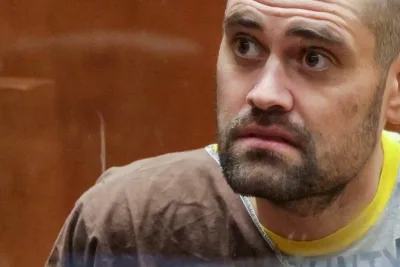
Imagine you are a juror in a murder trial. A married couple has been found shot dead.
The defendant denies the charge. You and your fellow jurors are unsure whether to believe his protestations of innocence.
>>> Star Wars Film The Mandalorian and Grogu Falters at Box Office
At the hotel that evening, another juror suggests contacting the spirits of the dead couple to find out if the defendant is lying.
You all sit around a Ouija board and ask: “Who killed you?” The board spells out the defendant’s name.
The next day, you return a guilty verdict.
Sounds absurd?
In 1994, an English jury did exactly that—a retrial was ordered, and the defendant was found guilty again.
But relying on body language to detect lies is no less absurd, yet courts continue to encourage it.
The Problem with Body Language
Judicial directions in Scotland advise jurors they can “look at the content of witnesses’ evidence, [and] their body language in giving it.”
In England and Wales, jurors are told not to take so many notes that they cannot “observe the manner/demeanour of the witnesses.”
This assumes a clear link between body language and deception, but research shows that link is not trustworthy.
The most common myth is that liars avoid eye contact. In reality, liars often maintain eye contact to gauge the listener’s reaction.
Another popular belief is that eye direction reveals lying. Other supposed tells—mouth covering, nose scratching, eyebrow raising—also lack scientific backing.
>>> Former CIA Agent David Rush Accused of Stealing $40 Million in Fraud Scheme
Studies show that appearance bias affects sentencing: attractive defendants are more likely to be found not guilty or receive shorter sentences.
Why Words Matter More
Lying is primarily a linguistic act. Our language exposes our inner thoughts, intentions, and emotions.
Liars may control the content of what they say, but they have less control over word choice, grammar, sentence length, and style.
This is because lying is cognitively demanding. The liar must tell the lie, monitor its reception, and adapt if needed—all in real time.
This leaves them vulnerable to linguistic cues slipping out.
One such cue is a sudden shift from “I” to “we.”
For example, someone saying “I … we thought” may be trying to create distance from the lie by hiding in numbers.
Liars also tend to avoid sensory-perceptual details—like what they saw, heard, or felt—and instead refer to internal thoughts (“I remember thinking …”).
When we experience a traumatic event, we naturally describe it with sensory details. But liars fabricating an experience often lack that descriptive language and focus on reasoning instead.
Of course, not all liars lie the same way. Context—whether a casual conversation or an official interview—affects the linguistic signals.
But listening carefully to what people say offers far more reliable clues than watching their body language.
>>> Documentary Captures Lingering Trauma of War-Torn Homs
If courts continue to encourage jurors to judge truth based on demeanour rather than the content of testimony, they might as well let them consult the supernatural.