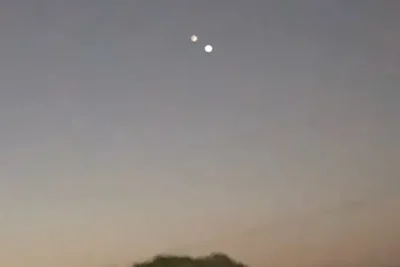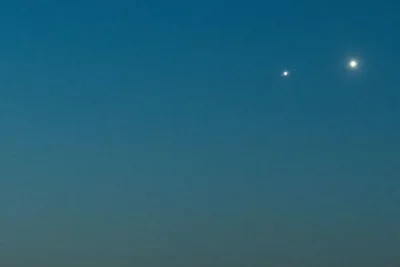
A rare celestial event unfolded on Sunday, May 31, 2026, as the night sky showcased a full moon that was both a micromoon and a blue moon.
This alignment marked the farthest, smallest, and dimmest full moon of the year, according to experts.
>>> Ryanair Cuts Operations at 19 European Airports, Shifts Focus to Poland
During this phase, the Moon reached its apogee at a distance of 406,368 kilometers from Earth.
The event generated significant discussion on social media due to its unique physical characteristics.
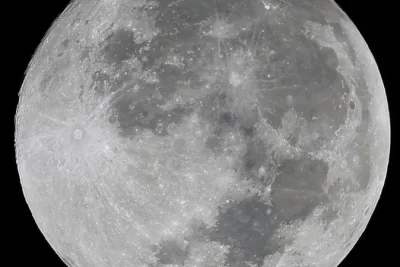
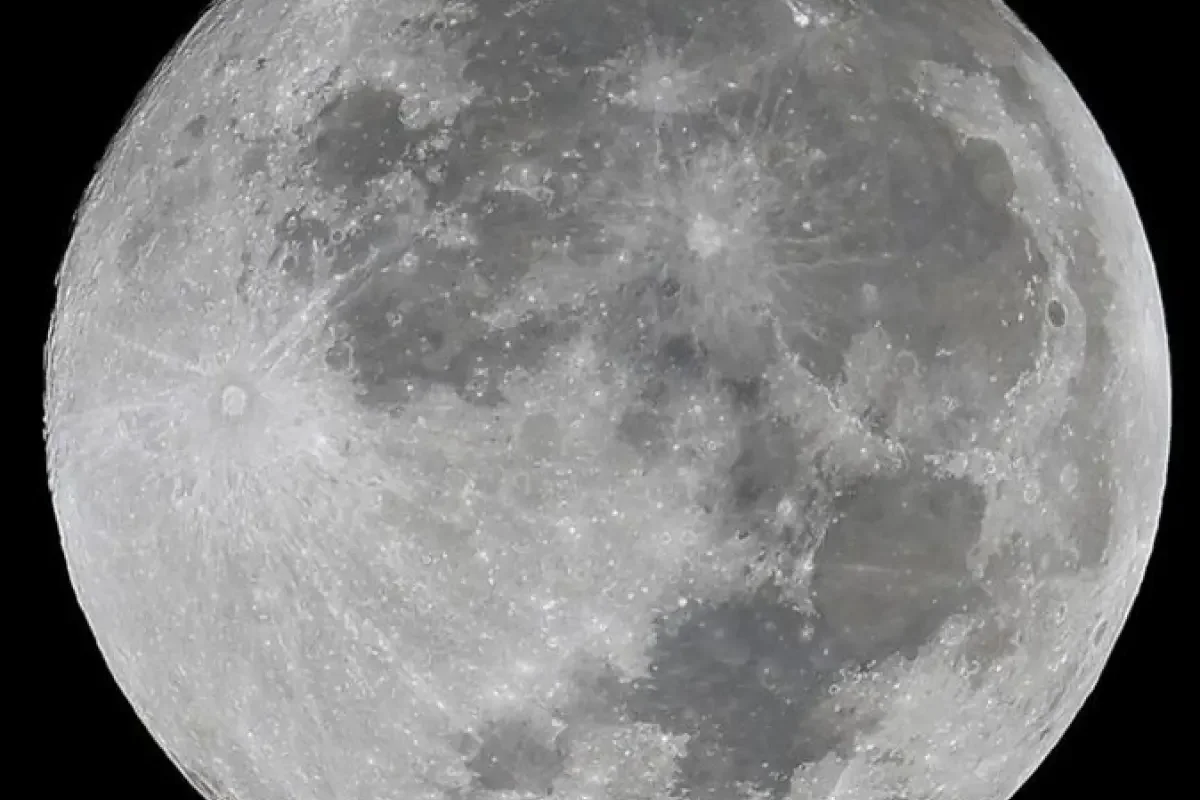
Astrophotographer Soumyadeep Mukherjee captured the visual differences of the lunar cycle from Kolkata, eastern India, using identical equipment across different months.
He used the same camera, lens, and focal length to keep the image scale consistent.
Mukherjee faced potential disruptions from seasonal weather patterns ahead of the monsoon.
He was nervous in May, just before the monsoon arrives, but luckily managed to capture both moons with clear skies.
Editors from NASA's Astronomy Picture of the Day blog detailed the appearance of the celestial body.
They noted that just after sunset, the full moon appeared slightly smaller and dimmer than usual.
In fact, tonight's micromoon is the farthest, smallest, and dimmest moon this year.
>>> New Film 'Pressure' Dramatizes D-Day Weather Decisions
The rarity of a blue moon coinciding precisely with a micromoon means the next identical occurrence is nearly three decades away.
Although the next micromoon occurs next month and the next blue moon at the end of 2028, the next blue micromoon will not occur until 2053.
Origin of the Term 'Blue Moon'
The historical origin of the term "blue moon" stems from a mid-20th century publishing error rather than actual lunar coloration.
Kelly Beatty, a writer for Sky & Telescope, explained that this colorful term is actually a calendrical goof that worked its way into the pages of Sky & Telescope in March 1946 and spread to the world from there.
Historical records show actual blue-colored moons have occurred during major atmospheric events, such as the 1883 volcanic eruption in Indonesia.
NASA's science editorial team noted that people saw blue moons almost every night after the Indonesian volcano Krakatoa exploded with the force of a 100-megaton nuclear bomb.
The atmospheric particles from the volcanic plume altered how light filtered through the atmosphere globally.
Some plumes were filled with particles 1 micron wide, about the same as the wavelength of red light.
>>> UK Eases Welfare Checks as Mental Health Claims Hit Record Backlog
Particles of this size strongly scatter red light while allowing blue light to pass through. Krakatoa's clouds thus acted like a blue filter.