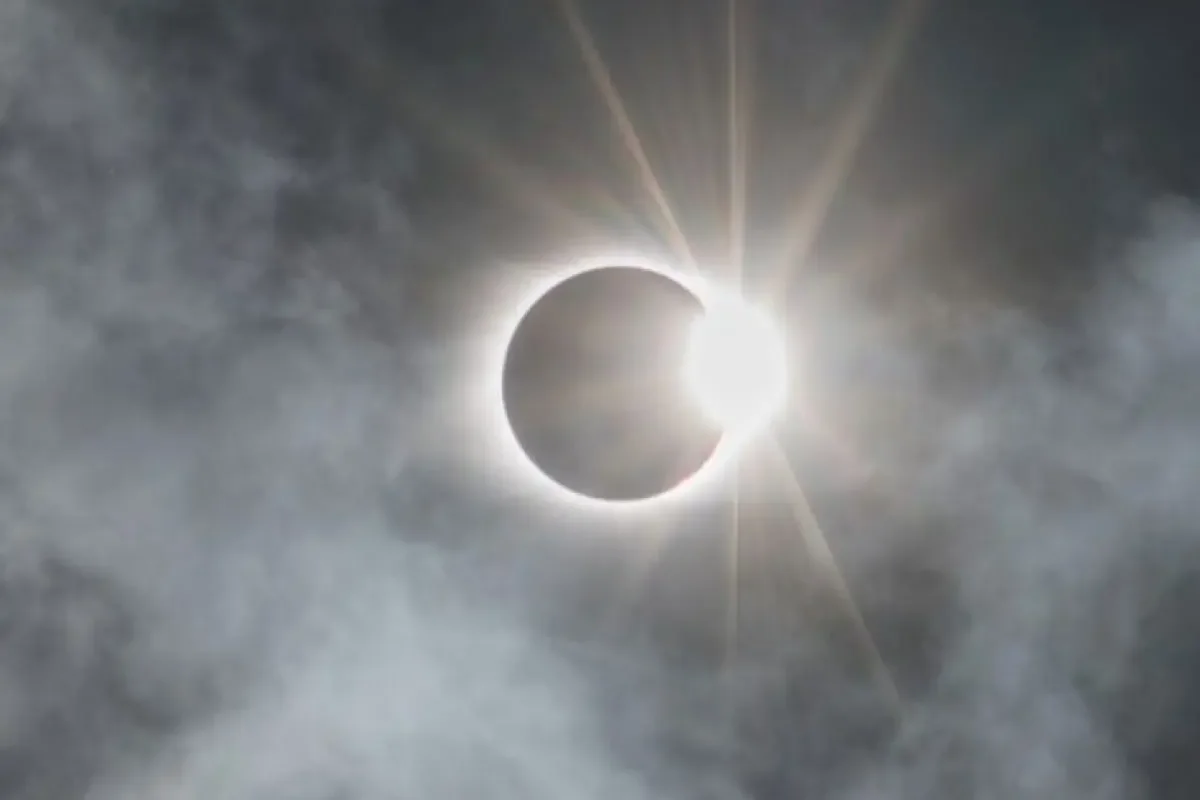
A new study published in the journal People and Nature on May 27, 2026, found that participating in science activities during awe-inspiring natural events significantly boosts individuals' science identity and sense of belonging.
Researchers from North Carolina State University, the New York Institute of Technology, and Illinois State University evaluated 528 volunteers aged 8 to 80 who recorded animal behaviors during the 2024 total solar eclipse through a project called Solar Eclipse Safari.
>>> Prime Video's Spider-Noir Draws Criticism for Graphic Violence and Mature Themes
The project, hosted on the citizen science platform SciStarter, showed that participants who witnessed the total eclipse experienced greater awe, which directly correlated with a stronger personal connection to scientific fields regardless of age, gender, or race.
Why Awe Matters
Dr. Kelly Lynn Mulvey, a psychology professor at North Carolina State University, explained the motivation behind investigating these emotional mechanisms.
"Although research has shown that engaging in participatory science increases the way people relate to science, there has been very little work on why," said Mulvey, corresponding author of the paper.
"We wanted to explore that area and also evaluate whether awe is a mechanism that changes the way people involved in participatory science projects think of themselves with regard to science."
The study used validated psychometric instruments to track changes in science identity and belonging, finding substantial post-eclipse increases across all demographics.
"First of all, we saw increases in science identity and belonging for study participants who took part in this project," Mulvey said.
"We also found that awe played a powerful role."
Volunteers inside the path of totality reported the highest levels of wonder, which strongly predicted their subsequent feelings of fitting into the scientific community.
"Participants who witnessed the totality reported significantly greater awe," Mulvey said.
"And the greater the sense of awe that people reported, the greater the reported increase in science identity and belonging."
The research team also discovered that participants who documented unusual wildlife responses experienced elevated awe, even if they did not initially realize the behaviors were atypical.
"Once the observed activities were analyzed, we found that the sense of awe was greater for those study participants who also recorded unusual behavior by animals—even if the study participants didn’t realize they were recording unusual behavior," said Mulvey.
>>> Dutch Police Arrest Murder Suspect After Youth Soccer Leader Found Dead
The findings indicate that formal training or long-term commitments are not required to alter how everyday citizens view their capability in STEM fields.
"One exciting take-away here is that even a single experience can lead to meaningful changes in how you identify with science and whether you feel like you belong when engaging with science," said Mulvey.
"These changes in science identity and belonging didn’t require formal training or participation in a long-term study.
It was also remarkable that everyone from small children to older adults felt a sense of awe and had an increased sense of science identity and belonging."
The study suggests that educators can leverage localized natural phenomena to achieve similar outcomes without waiting for rare celestial events.
"It’s also worth noting that you don’t need a solar eclipse to feel awe," Mulvey said. "Small moments of awe can occur in your own neighborhood.
And there are a wide variety of participatory science projects that people can connect with."
Caren Cooper, a forestry and environmental resources professor at North Carolina State University, emphasized the dual benefits of citizen science.
"Participatory sciences have led to many discoveries that scientists couldn’t have made on their own," said Cooper, coauthor of the paper.
"Another great thing is that, by making observations, participants not only change what’s known, they change in personal ways too."
Adam Hartstone-Rose, a biological sciences professor at North Carolina State University, noted the broader societal value.
"The big takeaway here is that doing science during an awesome experience made people feel more connected to science," said Hartstone-Rose, coauthor of the paper.
>>> EU's New Biometric Border Checks Cause Major Airport Delays
"We think it’s important to get people engaged with STEM fields, and anything we can do to increase feelings of identity and belonging with regard to science is valuable."