Pope Leo XIV issued a sweeping papal manifesto on May 25, 2026, demanding robust global regulation of artificial intelligence.
The call coincides with reports from tech firm Anthropic that its newest AI model discovered over 23,000 potential security vulnerabilities in open-source software.
>>> Jazz Legend Sonny Rollins Dies at Age 95
The convergence of the Vatican's moral warning and Anthropic's technical findings highlights growing concerns over the rapid expansion of advanced autonomous systems.
Anthropic reported that its Claude Mythos Preview model scanned more than 1,000 open-source projects, identifying thousands of severe security flaws.
External security firms have verified 1,726 of these vulnerabilities, with over 1,000 classified as high or critical severity.
The company noted that while 1,100 unverified findings have been shared with software vendors, only 75 critical or high-severity issues have been patched so far, resulting in 65 security advisories.
“The number of patches is still relatively low for three reasons.
First, we’re still early in the 90-day window that’s set out in our Coordinated Vulnerability Disclosure policy: we expect many more patches to land soon,” explained Anthropic.
The firm stated that its disclosures are currently placing heavy pressure on the cybersecurity industry.
“Second, we are likely to be undercounting patches because some vulnerabilities are patched without a public advisory: in those cases, we’re reliant on scanning for the patches ourselves using Claude.
Third, the low volume of patches reflects a genuine problem: even at our relatively slow pace of disclosures, Mythos Preview is adding to an already-overloaded security ecosystem,” added Anthropic.
Vatican Calls for Ethical AI Governance
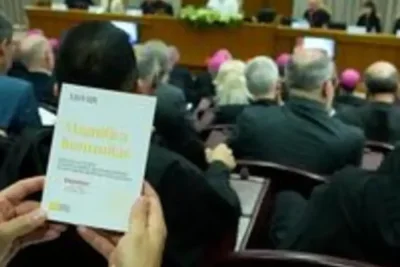
Amid these rapid technological developments, Pope Leo XIV signed his first encyclical, "Magnifica Humanitas," criticizing the concentration of power in the private tech sector and the deregulation of lethal AI military applications.
Speaking at a special Vatican presentation, the pontiff argued that algorithms must not be granted the authority to make irreversible wartime choices.
“Artificial Intelligence now demands to be disarmed, freed from logics that turn it into an instrument of domination, exclusion and death,” said Pope Leo XIV.
>>> US Communities Hold Memorial Day Parades Despite Rainy Weather Forecasts
The pope urged political leaders and technology developers to prioritize human dignity over commercial profit and political power.
“It is not enough to invoke ethics in the abstract; robust legal frameworks, independent oversight, informed users and a political system that does not abdicate its responsibility are required,” wrote Pope Leo XIV.
The document calls for a collaborative international framework to govern AI development transparently.
“A more moral AI is not enough if that morality is determined by a few,” wrote Pope Leo XIV.
Anthropic co-founder Christopher Olah attended the Vatican launch and welcomed the spiritual leader's scrutiny regarding the societal impact of automation.
“We need more of the world — religious communities, civil society, scholars, governments — to do what His Holiness has done here: to take this seriously, to look closely, and to push events in a better direction,” said Christopher Olah, co-founder of Anthropic.
Olah emphasized that independent moral evaluations are necessary to guide the industry safely.
“We need moral voices that the incentives cannot bend,” said Christopher Olah.
Legal and tech industry experts suggest the papal encyclical will serve as a foundational reference point for future international policy debates on AI governance.
“I am convinced that this will prove to be a defining document for our era, a profound and prophetic document,” said Paolo Carozza, law professor at Notre Dame Law School and chair of the Meta Oversight Board.
Carozza noted that the text provides a systematic framework for aligning technology with human flourishing.
>>> UK Records Highest Ever May Temperature as Heatwave Sweeps Europe
“Pope Leo is offering a clear, comprehensive, and coherent voice urging us to take responsibility for constructing a world in which technology will serve humans rather than degrade them,” said Paolo Carozza.