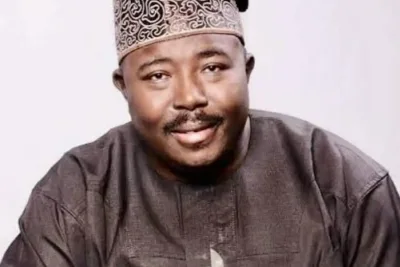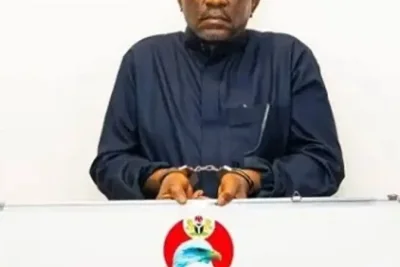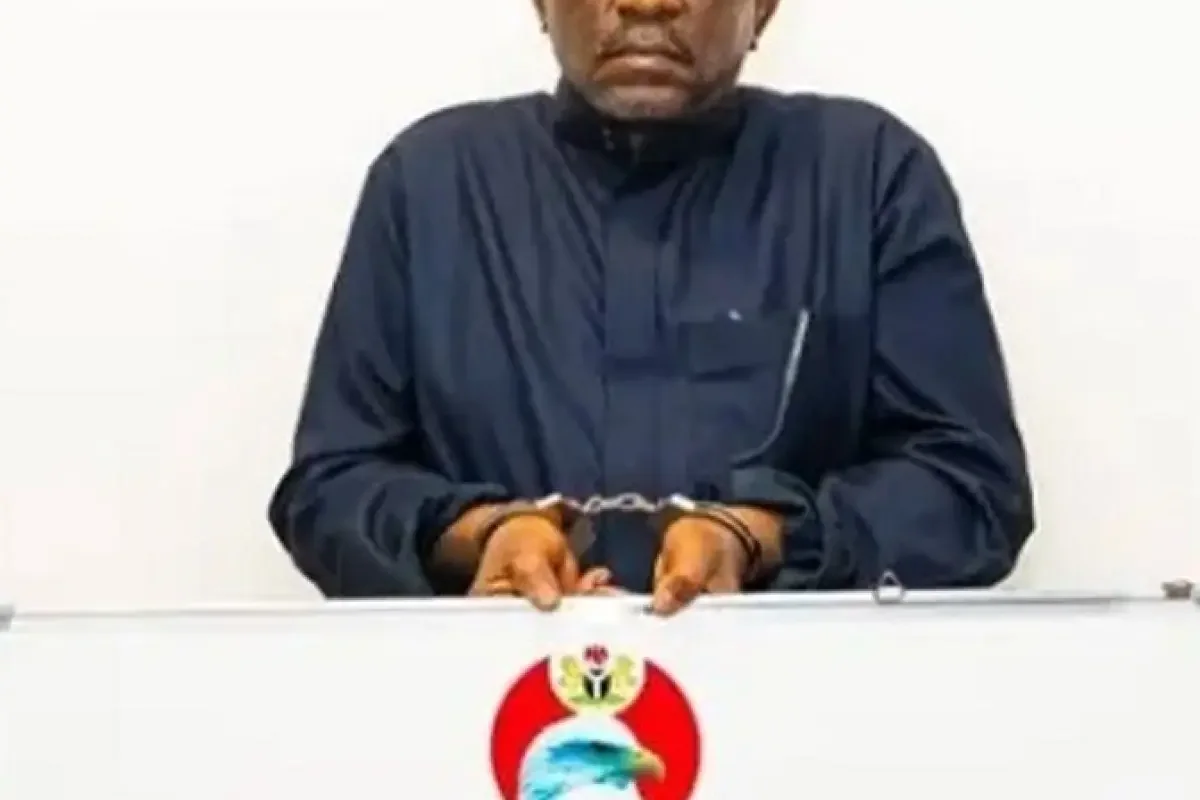
Nigeria's Economic and Financial Crimes Commission (EFCC) arrested former Power Minister Saleh Mamman in Kaduna State on Tuesday, May 19, 2026, following his conviction for a 33.8 billion naira money laundering scheme.
Mamman had gone into hiding earlier this month after a federal court sentenced him in absentia to 75 years in prison.
>>> Honda Recalls Nearly 60,000 EVs Over Rearview Camera Glitch
Anti-graft operatives tracking the former official apprehended him alongside two individuals who were providing him protection.
The court ordered Mamman to refund an outstanding balance of 22 billion naira diverted from the government-funded Mambilla and Zungeru hydroelectric power projects.
According to the EFCC, the convictions spanned 12 counts related to criminal breach of trust and unauthorized conversion of public funds between 2019 and 2021.
Operational surveillance lasted several weeks before authorities located the convict.
"For us, getting the convict to serve his jail terms is extremely important in view of the seriousness with which we are tackling corrupt practices," said EFCC Chairman Ola Olukoyede.
He noted that surveillance operations were opened to the public after Mamman failed to appear for his scheduled court sentencing sessions.
Olukoyede described the arrest as "a testament to the commitment of the Federal Government of Nigeria to the fight against corruption in Nigeria."
He added that the commission would ensure that individuals who misappropriate national resources face legal consequences regardless of where they hide.
Court Ruling and Sentencing
Federal High Court Judge James Omotosho ruled that the prosecution proved its financial fraud case beyond a reasonable doubt before issuing an international arrest warrant.
"About 14 to 15 months down the line, specifically on the 7th of this month, we secured convictions on all 12 counts.
Because the defendant didn't show face, the issue of sentencing was shifted.
And on the 13th of this month, they sentenced even though he didn't show face," Olukoyede said.
The presiding judge condemned the diversion of infrastructure funds, noting that the country's persistent electricity shortages were worsened by the actions of the defendants.
"The sheer greed of the defendant and his comrades in crime is nothing but a downright shameful thing," Justice Omotosho remarked.
Court records indicated that the former minister utilized proxy corporations and close associates to siphon the infrastructure development funds.
>>> Paramount Drops Tom Hardy From MobLand Season 3 After Production Clashes
"The defendant was living large at the expense of ordinary Nigerians who had suffered from the consequences of his malfeasance.
Little wonder that Nigeria has remained in darkness till now," Justice Omotosho stated.
Political commentator and All Progressives Congress chieftain Ayekooto Akindele linked the administrative challenges of subsequent power officials to the financial discrepancies left behind by the former minister.
Legal policy experts tracking regional anti-graft data noted that while high-profile convictions remain uncommon, institutional delays continue to hamper broader accountability efforts.
"Further analysis shows that most cases concluded so far involve appointed officials, suggesting that convictions are less common among those elected into office than those appointed," reported Dataphyte.
Analysts highlighted that complex asset tracing across multiple jurisdictions frequently prolongs the prosecution timeline for politically exposed individuals.
"Isolated convictions alone are not enough to conclude that the anti-corruption fight has become fully effective," cautioned David Alechenu, Team Lead at the Nigeria Anti-Corruption Agencies Strengthening Project.
He emphasized that structural reforms are necessary to measure the systematic prevention of public fund diversion.
"The real test is whether these efforts are becoming systematic, preventive, or institutionalised," Alechenu added.
Legal specialists observed that defendants with substantial resources often utilize procedural strategies to stall trials across multiple administrations.
"Where there is clear evidence of a crime, the strategy is often to keep delaying until they can negotiate a settlement or until a favourable government comes into power and offers some form of relief," said Amina Umaru Miango, Project Manager at the Centre for Journalism Innovation and Development.
She stated that political connections and legal representation allow high-profile individuals to extend court proceedings over many years.
Civil society representatives stated that the lack of public awareness regarding final court outcomes impacts public trust in regulatory bodies.
"In fact, those faces plastered on their EFCC platforms eventually go on to hold even higher political offices," said Ahmad Adedimeji Amobi, an Osogbo-based writer.
>>> Mediacorp Named Broadcaster of the Year at New York Festivals
Mamman faces an additional, separate corruption trial in Abuja concerning the alleged fraud of 31 billion naira, where a separate warrant remains active after his failure to appear.