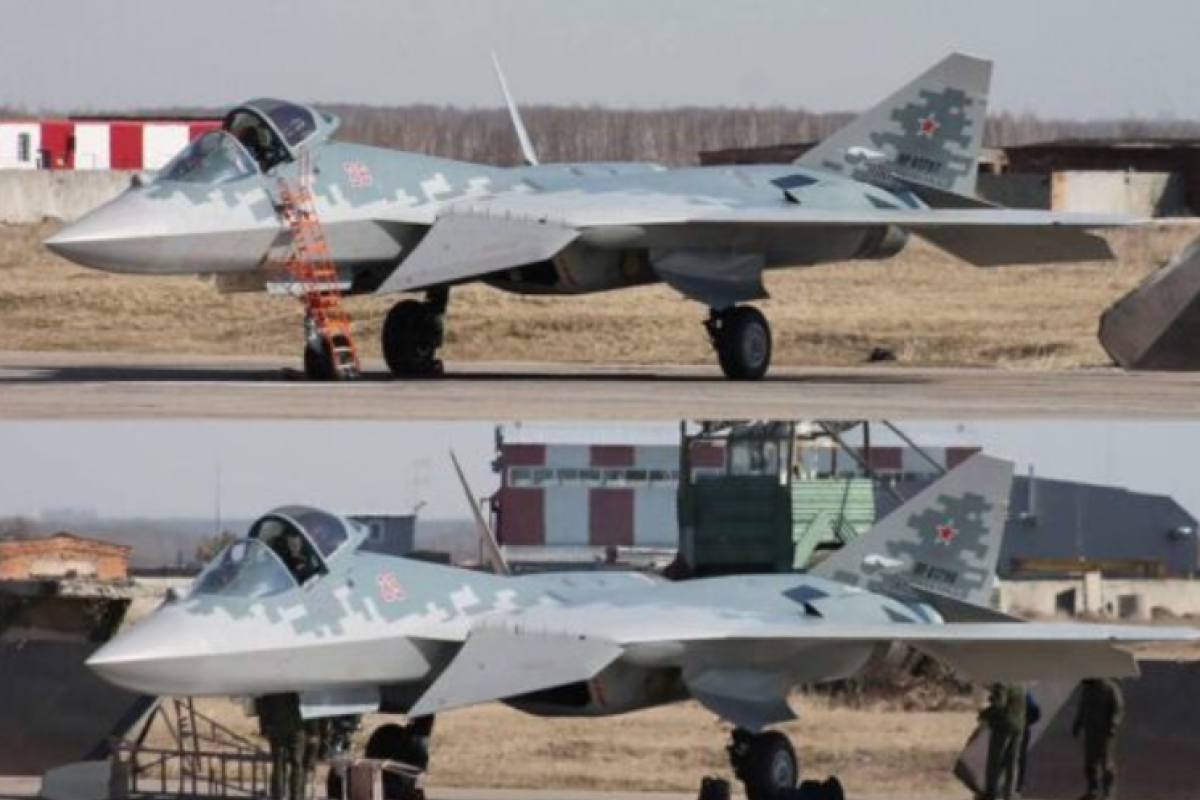
A recently surfaced photo has ignited intrigue among military analysts, showcasing two Sukhoi Su-57 stealth fighters—Russia’s fifth-generation jet known to NATO as the Felon—parked on an undisclosed airport apron. Emblazoned with bold red bort numbers "25" and "26," these aircraft appear to be newly built additions to the Russian Aerospace Forces (VKS). While United Aircraft Corporation (UAC), the jet’s manufacturer under state-owned Rostec, has remained silent, the numbering suggests a quiet yet steady expansion of Moscow’s most advanced fighter program.
Red Bort Numbers: Clues to Russia’s Production Puzzle
In Russian military aviation, bort numbers painted on fuselages often serve as identifiers for tracking a jet’s production batch and operational status. Red codes, in particular, have historically marked aircraft in testing or early production phases. However, recent patterns indicate that such numbers may also signify newly assembled units awaiting formal delivery to the VKS. The appearance of "25" and "26" aligns with earlier sightings of Su-57s labeled up to "24," which underwent flight tests in 2022. If these numbers reflect sequential production, Russia could now possess over two dozen Su-57s, either operational or nearing combat readiness.
The Su-57: Russia’s Stealth Ambitions Take Flight
Developed by Sukhoi and manufactured by UAC, the Su-57 represents Russia’s answer to Western fifth-generation fighters like the F-22 Raptor and F-35 Lightning II. Touted as the VKS’s crown jewel, the Felon combines stealth design with advanced avionics, including the N036 Byelka AESA radar and L402 Himalayas electronic warfare system. Its AL-41F1 engines, equipped with thrust-vectoring nozzles, grant exceptional maneuverability—a feature Russia emphasizes to counterbalance its jet’s debated stealth capabilities. Internal weapon bays house cruise missiles and anti-radar munitions, preserving its low-observable profile during missions.
Despite a troubled development timeline plagued by funding shortages and technical setbacks, the Su-57 has seen limited combat testing in Syria. Moscow positions it as a cornerstone of future air dominance, though Western analysts remain skeptical of its true stealth efficacy.
Silence from UAC: Secrecy or Strategy?
UAC and Rostec’s refusal to acknowledge these new units fits a broader pattern of opacity surrounding Russia’s military projects. This secrecy may stem from ongoing Western sanctions, which have hampered access to critical technologies like advanced semiconductors. Yet, experts speculate the Su-57’s accelerated production could signal urgent efforts to replenish VKS losses in Ukraine, where jets like the Su-35 have proven vulnerable to modern air defenses.
There’s also speculation about export ambitions. Despite India’s withdrawal from a joint fifth-gen fighter program with Russia in 2018, nations like Algeria have expressed interest in the Su-57. The emergence of new units might hint at preparations for customized variants tailored to foreign buyers.