British fish and chip shops are expanding their menus with alternative domestic seafood species to combat record-high cod prices and supply chain volatility on National Fish and Chip Day, Friday, June 5, 2026.
Imported cod and haddock costs have surged by up to 200% over the last two years due to reduced Atlantic fishing quotas and global conflicts.
>>> Ed Sheeran Surprises Ipswich Waterfront with Free Concert
This has triggered the closure of 1,500 chippies during the last three years.
To secure their business survival, many of the remaining 10,000 UK takeaways are shifting away from a reliance on imported fish.
They are introducing cheaper, UK-caught options like hake, pollock, coley, monkfish, seabass, and rock salmon.
Industry Leaders Highlight Challenges and Opportunities
Andrew Crook, the president of the National Federation of Fish Friers, highlighted the growing administrative and financial pressures that independent shop owners currently face across the country.
"We are seeing shops close," said Crook.
He noted that smaller establishments struggle to maintain profitability while simultaneously keeping up with increasingly complex regulatory requirements.
"It's more and more difficult for the smaller shops just to compete and keep up with legislation," he said.
According to Crook, the administrative burden takes shop owners away from their primary operational duties.
"We're busy producing fish and chips - that's what we came into the industry for - and you spend more and more of your time filling out forms and making sure you're compliant," he said.
Crook believes a new industry collaboration with Discover Seafood offers an important commercial pathway by utilizing domestic catches to navigate the ongoing supply difficulties.
"This collaboration is really important.
What Ryan and John and others are doing is great – they’ve proved there is a real commercial opportunity there.
We will certainly always need imported fish, but the domestic catch can help us navigate current challenges in supply and benefit not just fish and chip shop owners but UK fishermen and coastal communities too," he added.
George Morey, who operates Knight's Fish & Chips in Glastonbury, Somerset, detailed the specific financial strain caused by wholesale seafood inflation.
"We're probably paying about £150 more a case for cod than we were last year, it's a massive increase and sadly we can't absorb those kinds of increases," said Morey.
Morey explained that an 18kg case of cod now costs his business £298, which forces retail price adjustments.
"We do have to put the price up, but in order to help with the damage we put on all these other species so we can keep the cod price where we want it to be, both for us and the customer," he said.
Despite a portion of hake being priced at £6.50 compared to £8.20 for cod, Morey finds consumers hesitant to break their traditional ordering habits permanently.
"You will offer them a small taste of a different species and they'll go 'wow that's great, I love it'.
But then you'll ask them what they want to purchase and they'll say 'I'll have the cod please!'
," he said.
He observed that British customers retain an intense, long-standing loyalty to this specific traditional meal option.
"They're religious - fanatical - about it, and willing to pay a premium because that is what cod is, a premium product.
It's the white gold," he added.
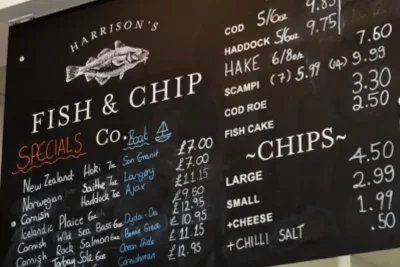
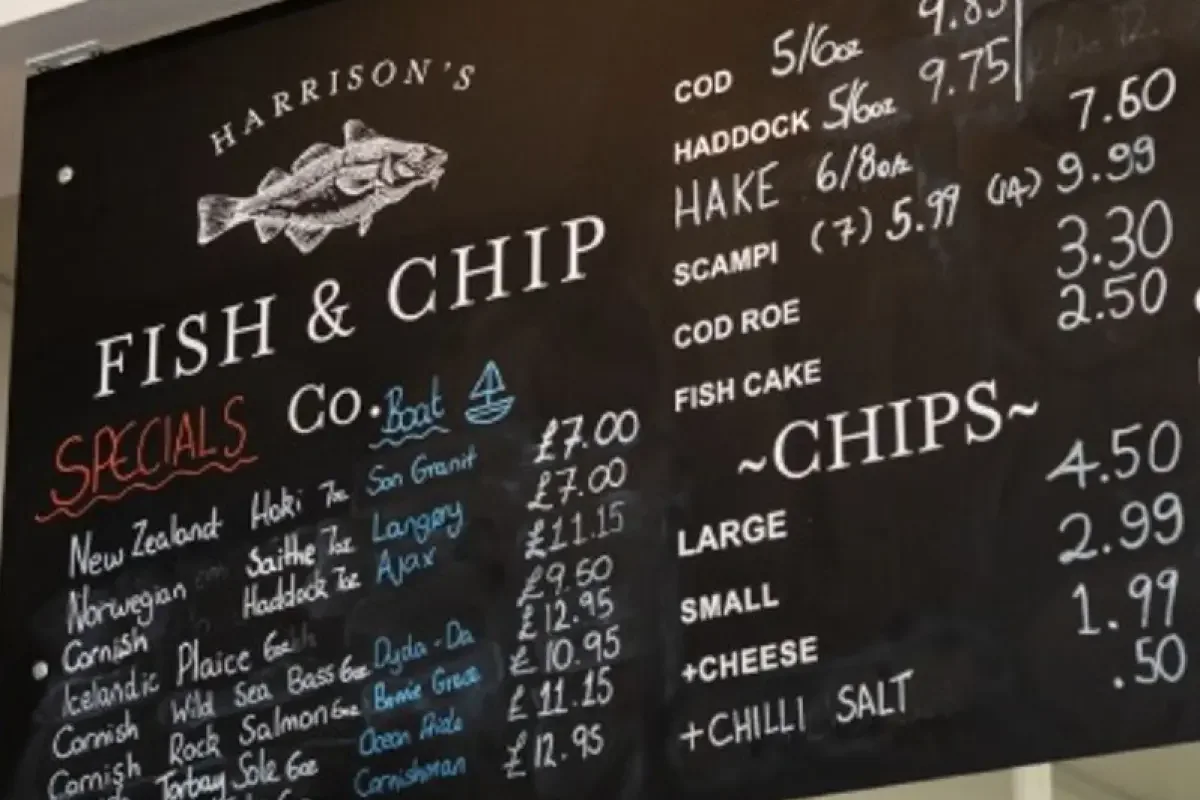
Ryan Harrison, the owner of Harrison’s Fish & Chip Co. in Oxford, has successfully altered his menu over the past year by sourcing rock salmon, sea bass, and soles from Cornwall.
"We offer a range of battered UK-caught species alongside other options on our menu. It makes good business sense for us.
We have a diverse mix of customers and it means a bigger variety of fish for them at different price points, and more options for us now and into the future.
And because it’s good for our UK fishermen too, it’s a no-brainer," said Harrison.
His shop won the Menu Innovation Award at the National Fish and Chip Awards after demonstrating that providing more choices makes customers more open-minded.
"It’s simple really," adds Ryan.
"If people want their local fish and chip shop to survive, they’ve got to be flexible and try new things.
>>> Sex Pistols' First Manchester Gig 50 Years Ago Sparked Punk Revolution
We’ve found that giving customers more choices has made them more open-minded. As long as it’s quality fish, when it’s battered, it tastes great.
And when it comes to domestic species, our customers love that we do something different, that they know where our fish comes from and which boat caught it."
John Molnar, an experienced chef who runs four locations of The Cod’s Scallops in Nottingham, serves over 20 species daily from Brixham, Peterhead, and Norfolk to counter the lack of trade diversity.
"We have a wet fish counter at our shops where customers can see and learn more about the range of seafood we have on offer.
This isn’t possible for everyone, but even a small sink with ice and a few local species helps consumers see what they could try – and at a reasonable price.
UK tastes and habits are evolving all the time and once you put something different in front of customers, many want to try it – the younger ones in particular.
Britfish for us has included Brixham monkfish goujons alongside baked hake and new experiments with seafood-loaded fries," said Molnar.
Gavin O’Donnell, speaking for Discover Seafood, noted a major contradiction in British seafood consumption, pointing out that the UK exports 70% of its catch but imports 80% of what it consumes.
"In the UK, we export 70% of the seafood we catch and import 80% of what we eat.
Yet we have a national food strategy focused on raising the profile of British-grown and produced food, more resilient food systems and better environmental outcomes.
So there are real opportunities for UK-caught seafood – with many under-utilised, affordable and tasty species that fish and chip shops like Harrison’s and The Cod’s Scallops are already successfully selling.
This National Fish and Chip Day, we want to celebrate chippies using British fish and start to better understand how the sector more widely can follow their lead," said O'Donnell.
Adam Papa, the owner of Papa's in Weston-super-Mare, relies on three decades of community history and customer loyalty to endure the shifting economic climate.
"The main secret is the support of our patrons, and my colleagues who are absolutely amazing, they've been the rocks of the business," said Papa.
Papa remains confident that the traditional British meal will survive the current market challenges if local communities show active patronage.
"Fish and chips is our traditional meal and it's never going to die," he said.
He emphasized that consumers must adapt to the new economic reality facing local high street shops.
"What we need is understanding that fish is very expensive and not as reasonably priced as it used to be five years ago.
Just having their support for local businesses like ours is what it's all about. We've just got to get through this situation," he added.
During a promotional visit to Worthing Fisheries Fish & Chips, local councillors Martin McCabe and Vicki Wells spoke on the broader community value of independent family businesses.
"Fish and chips are a huge part of Britain's heritage and National Fish and Chip Day is a great opportunity to celebrate the family businesses that keep this tradition alive," said Cllr Martin McCabe.
McCabe stated that long-standing family establishments serve multiple generations and function as the economic backbone of local high streets.
"Worthing Fisheries has been part of our community for decades and is a fantastic example of a local independent business serving generations of residents.
It was a pleasure to visit and show our support," he said.
He concluded that local contributions from independent owners deserve explicit public recognition.
"Local businesses are the backbone of our high streets and communities, and it's important that we recognise the contribution they make to Worthing," he added.
Councillor Vicki Wells reinforced this sentiment by connecting family-run establishments to neighborhood employment and broader local economic health.
"Family-run businesses like Worthing Fisheries are about much more than the food they serve.
They provide local jobs, support the local economy and are often at the heart of community life," said Cllr Vicki Wells.
Wells noted that small enterprises face an uphill battle against rising energy bills, ingredients, packaging, and staffing costs.
>>> New York City Consumer Watchdog Targets Junk Fees and Subscription Traps
"We know many small businesses are facing challenging times, so National Fish and Chip Day is a wonderful chance to celebrate everything they do and encourage residents to support their local chippy," she said.