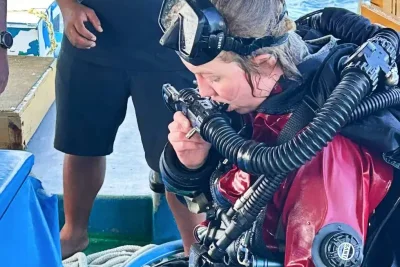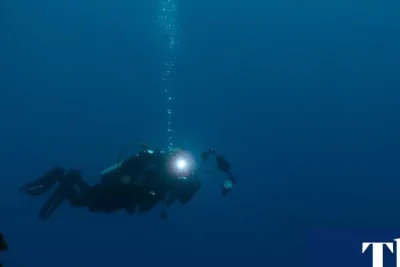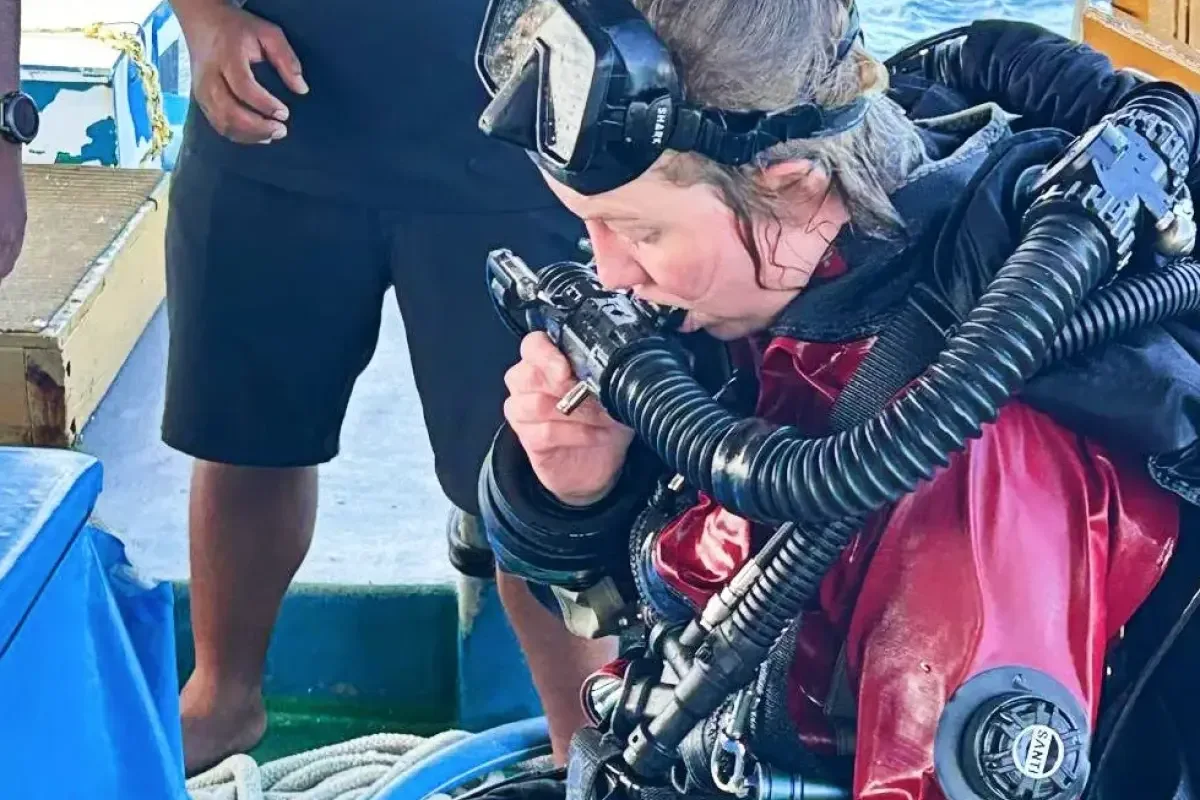
The Divers Alert Network announced Thursday that a specialized rescue team has recovered the bodies of four Italian divers and one Maldivian national defence force diver from the deep Dhekunu Kandu cave in the Maldives' Vaavu Atoll.
The recovery operation, coordinated alongside Maldivian police and Italian authorities, retrieved the remains of ecology professor Monica Montefalcone, her daughter Giorgia Sommacal, marine biologist Federico Gualtieri, researcher Muriel Oddenino, and diving instructor Gianluca Benedetti.
>>> Barry Hearn Urges Brentwood to Combat Knife and Drug Crimes
Maldivian soldier Mohamed Mahudhee also died from decompression sickness following his participation in the initial rescue attempts.
A specialized Finnish technical team using advanced breathing apparatus was deployed to retrieve the remaining victims from the 50-meter-deep cave system.
Investigation and Safety Concerns
Investigators are currently reviewing video footage and personal electronics to determine if the deep dive was connected to an official coral-research project or carried out as an unauthorized private initiative.
Liveaboard operators claimed the excursion went far beyond standard recreational depth limits.
Sami Paakkarinen, a member of the Finnish recovery team, reported to the Italian press that the victims were discovered together in a 50-meter dead-end tunnel off the second chamber.
He noted that the group lacked standard cave-diving safety lines and adequate equipment.
"Unfortunately, in most cave-diving accidents, the main cause is always human error," said Sami Paakkarinen, Recovery Diver.
British cave diver Jonathan Volanthen, who assisted in the 2018 Thailand cave rescue, explained to The Guardian that cave environments present distinct structural hazards compared to standard open-water diving because immediate surfacing is impossible during an emergency.
"If something goes wrong, you can’t simply head to the surface because there’s usually something that’s preventing that … Quite often in caves as well, it’s very easy to swim in somewhere and then find you stirred some silt up," said Jonathan Volanthen, Cave Diving Expert.
Volanthen noted that increased depth accelerates gas consumption and forces divers to manage slow ascents to prevent nitrogen bubbles from forming in the bloodstream.
"The deeper you are, the more air you use, or the more gas, depending on what you’re breathing … Depth generally equals an increase in danger," said Jonathan Volanthen, Cave Diving Expert.
He emphasized that proper training from a reputable agency remains the primary tool for divers to recognize their operational limits and make safe choices.
"If you are trained properly by a reputable instructor and a training agency, you’ll understand the limits," said Jonathan Volanthen, Cave Diving Expert.
Technical diving instructor Edd Sorenson stated that underwater caves lack all environmental light reflections, making continuous guide lines essential to prevent total spatial disorientation when a primary light source fails.
"Caves are not dark. Everybody thinks they’re dark … They’re devoid of light.
Your house at night is dark … When your light goes out [in a cave], there’s nothing," said Edd Sorenson, Technical Diving Instructor.
>>> Christian Churches Celebrate Pentecost Sunday Focusing on Community and Renewal
Sorenson noted that safety protocols require complete equipment redundancy, including a minimum of two tanks, two regulators, three lights, two dive computers, and dual writing devices.
"We have a minimum of two tanks for your two regulators, we have a three-light minimum rule … If we’re going to go a long way, we’re going to have more.
We have to have two computers," said Edd Sorenson, Technical Diving Instructor.
He warned that standard open-water swimming kicks can instantly destroy visibility by disturbing floor sediment, necessitating the use of horizontal frog kicks instead.
"If you get close to the bottom, that’s going to disrupt the sediment on the bottom … so on a flutter kick, you can instantly go from crystal clear water to zero visibility in the blink of an eye," said Edd Sorenson, Technical Diving Instructor.
Sorenson added that advanced instructional certifications can sometimes instill a false sense of security in divers who choose to operate beyond their actual knowledge base.
"Our propulsion goes horizontal or up from horizontal," said Edd Sorenson, Technical Diving Instructor.
He cautioned that skipping protocols amounts to extreme risk-taking, whereas proper training keeps the discipline safe.
"If they’re exceeding their training limit, exceeding their experience and exceeding their knowledge limits, they’re playing Russian roulette … Cave diving is a very, very safe sport with good training.
It’s a very unforgiving sport without," said Edd Sorenson, Technical Diving Instructor.
Bahamas-based instructor Cristina Zenato stated that underwater environments inherently require strict discipline and respect regardless of depth, urging against the absolute vilification of the sport.
"Is cave diving potentially dangerous? Absolutely.
So is being two metres below the surface because we’re not aquatic animals," said Cristina Zenato, Cave Diving Instructor.
Zenato concluded that psychological mindset and the willingness to cancel a dive at the water's edge are just as critical as technical training.
"You can be super hyper-trained, but I’ve sat on that water’s edge when I said ‘not today’, and then you’re in a car driving back, [wondering] did I call it," said Cristina Zenato, Cave Diving Instructor.
Divers Alert Network Europe officials reported that a prominent sand mound inside the second chamber likely obscured the actual exit route, directing the unguided Italian group into the dead-end passage where they ultimately exhausted their limited gas supplies.
>>> Independent Horror Film Obsession Projects 16 Percent Second Weekend Surge
The Maldivian government has temporarily suspended the operating license of the Duke of York liveaboard vessel while homeland and local police complete their parallel safety investigations.