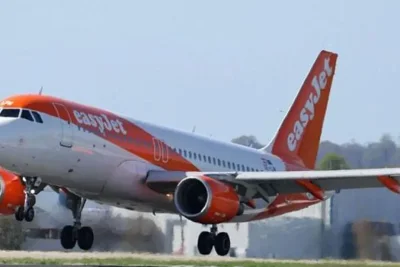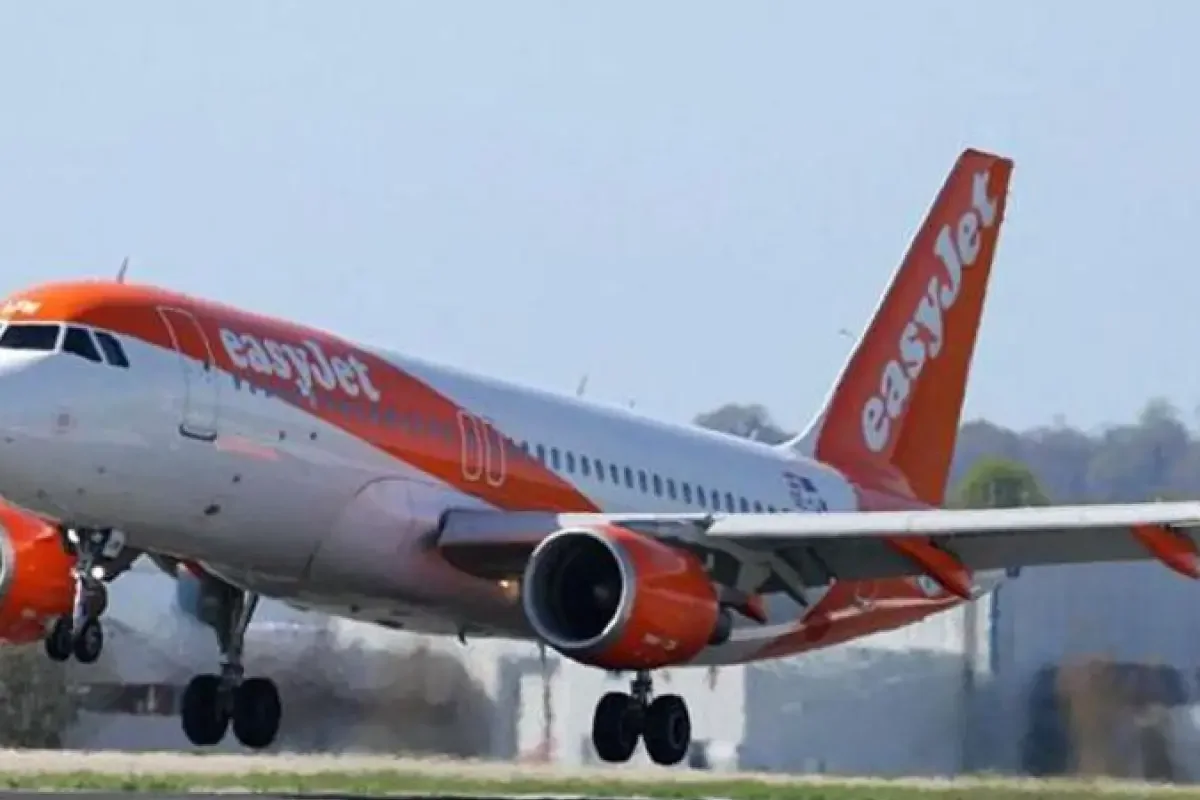
An EasyJet flight bound for London Luton Airport diverted to Rome Fiumicino Airport on Tuesday night after a passenger alerted crew members that a portable charger was actively charging inside luggage stored in the cargo hold.
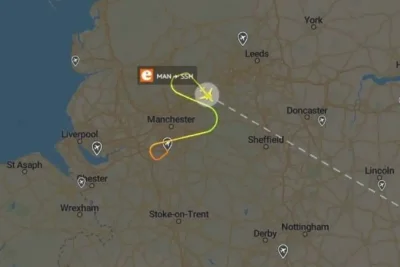
Flight EZY2618 had departed from Hurghada, Egypt, and was cruising at 36,000 feet over the Adriatic Sea when it executed a sharp left turn to land safely in the Italian capital approximately 20 minutes later, according to FlightRadar24 tracking data.
>>> Arizona and California Border Regions Expect Weather Shift This Week
The airline stated that the captain made the precautionary decision to divert the aircraft in strict accordance with safety regulations, subsequently rescheduling the flight for Wednesday and providing the delayed passengers with hotel accommodations, meals, or refreshments.
A spokesperson for the airline explained the details of the incident to the media, addressing the safety protocols and the subsequent passenger accommodations during the unexpected delay.
"The captain then took the decision to divert as a precaution in line with safety regulations," said a spokesperson for EasyJet.
The representative further detailed how the airline managed the affected travelers at Rome Fiumicino Airport before issuing an official apology for the operational disruption.
"The aircraft landed safely and passengers disembarked routinely and we provided hotel accommodation and meals where available.
As some customers remained in the airport, they were provided with refreshments," said a spokesperson for EasyJet.
The corporate statement reconfirmed the carrier's adherence to regulatory guidelines and expressed regret over the schedule alteration.
"The safety of its passengers and crew is EasyJet's highest priority and EasyJet operates its fleet of aircraft in strict compliance with all manufacturers' guidelines," said a spokesperson for EasyJet.
The representative emphasized the company's regret regarding the unexpected itinerary change and the impact it had on traveling customers.
"We would like to apologise to all passengers for any inconvenience caused by the diversion and subsequent delay," said a spokesperson for EasyJet.
>>> Phoenix Weather Forecast Predicts Holiday Rain and Cooler Temperatures
Power Bank Restrictions and Safety Concerns
EasyJet safety guidelines state that power banks are restricted to cabin baggage only, are prohibited from active use, must not charge other devices, and carry a strict limit of two devices per customer not exceeding 160 Watt-hours.
Other commercial carriers enforce comparable restrictions on lithium-ion batteries due to severe fire hazards that are significantly more difficult to suppress inside a cargo hold than within the main passenger cabin.
Ryanair completely prohibits power banks within checked baggage or overhead compartments, while British Airways limits them to 100 Watt-hours, requiring storage in seat pockets or under-seat bags while banning the use of onboard plug sockets to charge the power banks themselves.
Potential dangers were previously highlighted by aviation officials, noting that faulty lithium batteries power various personal electronics but present intense fire risks if they become damaged.
"Lithium batteries power everything from vapes and mobile phones to cameras and power banks.
If they become faulty or damaged, they can cause an intense fire that is difficult to extinguish, both in the cabin or the hold of an aircraft," said Glenn Bradley, Head of Flight Operations at the Civil Aviation Authority.
The aviation official previously advised the public on safe transport protocols to minimize fire risks during commercial flights.
"Correct handling reduces risk. Lithium batteries should be carried in your carry-on baggage.
Power banks and spare batteries should also be in a cabin bag and should be completely turned off and not in standby mode," said Glenn Bradley, Head of Flight Operations at the Civil Aviation Authority.
>>> The Guardian Marks 5,000th Pass Notes Entry with a Look Back at Iconic Topics
Prior incidents involving lithium-ion batteries include a November 2025 accident at Melbourne International Airport where a passenger suffered leg and finger burns from an igniting power bank, and a January 2025 fire that destroyed a passenger plane in South Korea.