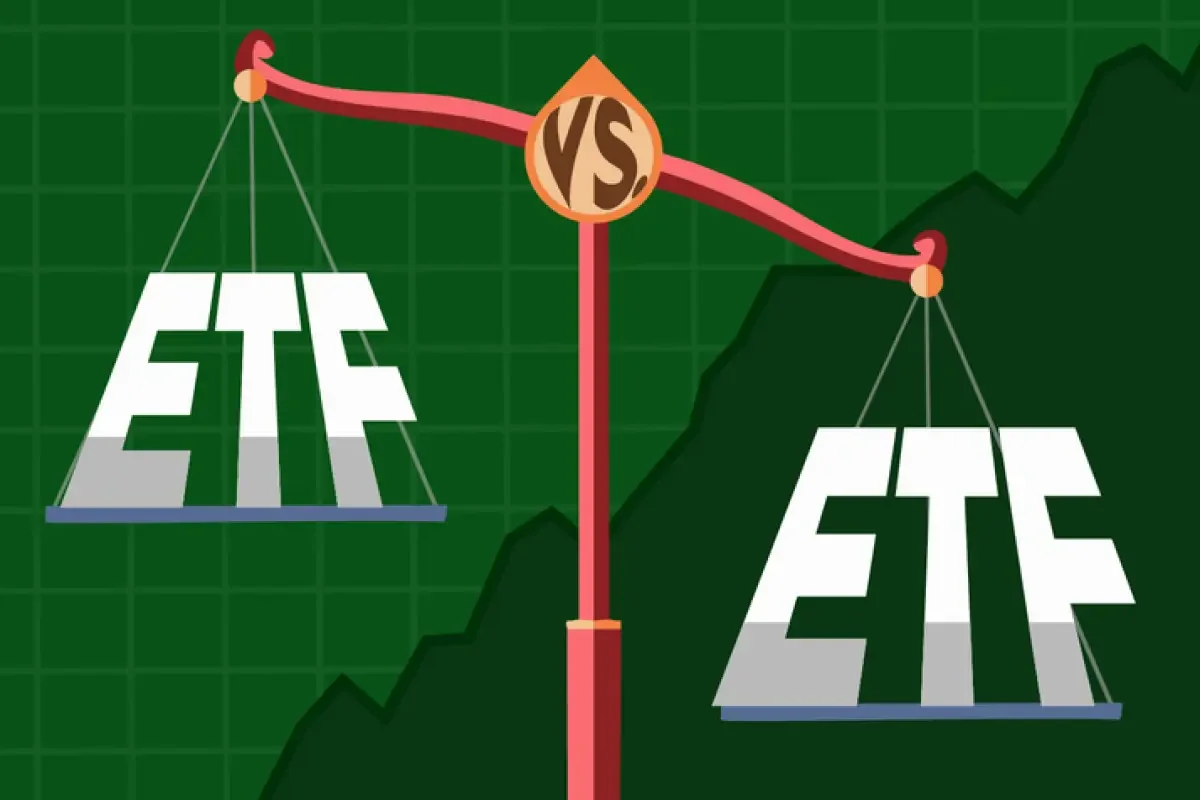
International investors often face a choice between broad global coverage and specific regional focus.
Two popular exchange-traded funds (ETFs) illustrate this decision: Vanguard Total International Stock ETF (VXUS) and Schwab Emerging Markets Equity ETF (SCHE).
VXUS provides exposure to non-U. S.
stocks across developed and emerging markets. SCHE concentrates solely on developing economies.
Costs and Returns Comparison
VXUS holds a slight edge in affordability and income. Its expense ratio is 0.05%, compared to SCHE's 0.07%.
The dividend yield for VXUS stands at 2.76%, while SCHE offers 2.67%.
Over the past year ending May 18, 2026, VXUS returned 29.36% versus SCHE's 24.89%.
Both funds have similar beta values relative to the S&P 500: VXUS at 0.93 and SCHE at 0.87, indicating slightly lower volatility than the U.
S. market.
Assets under management differ significantly. VXUS holds $629.2 billion, while SCHE manages $12.3 billion.
Risk and Historical Performance
Five-year maximum drawdown reveals higher risk for SCHE. The emerging market fund experienced a -35.73% peak-to-trough decline, while VXUS saw -29.44%.
A $1,000 investment in VXUS five years ago would have grown to $1,504. The same amount in SCHE would be worth $1,304.
These figures reflect the broader diversification of VXUS, which includes developed markets that tend to be more stable.
Holdings and Sector Allocation
SCHE invests in 2,213 holdings concentrated in emerging markets. Its top sectors are technology (30%), financial services (21%), and consumer cyclicals (10%).
Major holdings include Taiwan Semiconductor Manufacturing, Tencent Holdings, and Alibaba Group Holding. The fund launched in 2010 and pays a trailing-12-month dividend of $0.94 per share.
VXUS offers much broader diversification with 8,770 holdings. Its largest sector allocations are financial services (22%), technology (18%), and industrials (16%).
Top holdings for VXUS include Taiwan Semiconductor Manufacturing, Samsung Electronics, and ASML Holding. The ETF has a trailing-12-month dividend of $2.29 per share.
Portfolio Diversification Implications
Both ETFs provide international exposure to reduce U. S.
market dependence. However, their different target markets suit different investor profiles.
SCHE's focus on emerging markets offers higher growth potential but comes with greater volatility and risk. VXUS balances this by including developed international markets, providing more stability.
Investors seeking broad, low-cost international diversification may prefer VXUS. Those willing to accept higher risk for potentially higher returns from developing economies might choose SCHE.
As with any investment, consider your risk tolerance and portfolio goals before deciding.
Key Dates and Fund Details
The article was published on May 20, 2026 - 16:02.
SCHE launched in 2010 and has a trailing-12-month dividend of $0.94 per share, while VXUS has a trailing-12-month dividend of $2.29 per share.
Other schedules to note
- Expense ratio0.05%0.07%
- 1-yr return (as of May 18, 2026)29.36%24.89%
- Dividend yield2.76%2.67%
- Max drawdown (5 yr)-29.44%-35.73%
- The largest positions in SCHE include Taiwan Semiconductor Manufacturing, Tencent Holdings, and Alibaba Group Holding. This fund launched in 2010 and has a trailing-12-month dividend of $0.94 per share.
- The top holdings for VXUS include Taiwan Semiconductor Manufacturing, Samsung Electronics, and ASML Holding. This ETF has a trailing-12-month dividend of $2.29 per share.