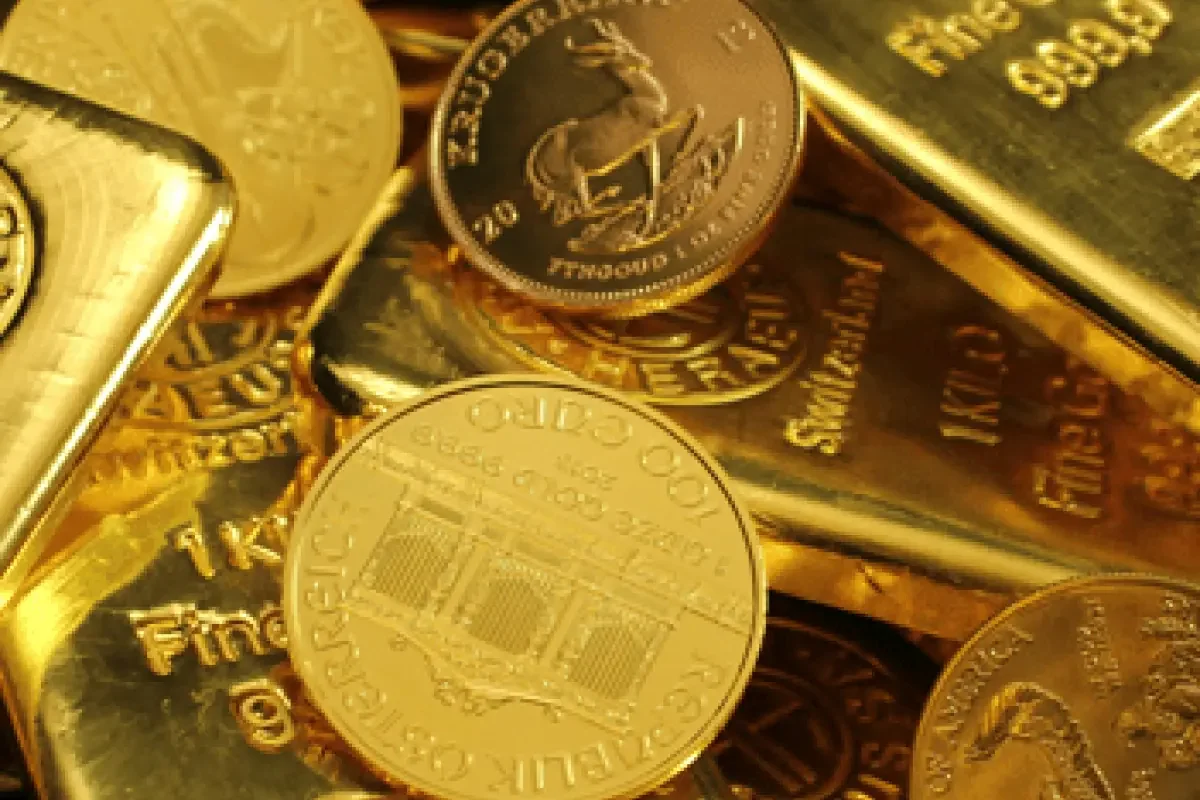
Gold prices remained largely unchanged on Wednesday as investors weighed the impact of surging government bond yields and a firmer U.
S. dollar against growing hopes for a diplomatic resolution to the Iran conflict.
>>> Jung Kook Launches Limited Edition Clothing Line With Calvin Klein
By 05:15 ET (09:15 GMT), spot gold was broadly flat at $4,480.57 per ounce, while gold futures declined 1.6% to $4,482.80 per ounce.
Bond Yields and Dollar Pressure Gold
Analysts at Phillip Capital noted that concerns remain over higher oil prices linked to the Iran conflict, which could trigger a new wave of global inflation and potentially force central banks to raise interest rates.
Government bond yields have climbed sharply in recent sessions, with the yield on the 30-year U. S.
Treasury bond rising to its highest level since the global financial crisis nearly two decades ago.
Bond yields typically move inversely to prices, and higher borrowing costs generally reduce the appeal of non-yielding assets such as gold.
At the same time, the U. S.
>>> Cher Celebrates 80th Birthday: A Look Back at Her Iconic Career and Romances
dollar hovered near a six-week high, making bullion more expensive for buyers using other currencies.
Markets are also awaiting additional signals on the future direction of Federal Reserve monetary policy, with minutes from the U.
S. central bank’s April meeting due later on Wednesday.
Hopes for U.S.-Iran Agreement
Despite ongoing geopolitical uncertainty, investors continue to hope that the United States and Iran may eventually reach a deal to end their conflict, which has now lasted for more than two months.
U. S.
President Donald Trump told lawmakers on Tuesday evening that the Iran war could end “very quickly.”
Earlier in the week, Trump said he had postponed additional planned strikes on Iran following requests from three Gulf states.
>>> Kyle Cooke and Amanda Batula Reunite Amid Separation at Premiere
Vice President JD Vance also expressed optimism in separate remarks, saying Tehran appeared interested in negotiating an agreement.
Meanwhile, Reuters reported that two Chinese-flagged supertankers transporting crude oil exited the Strait of Hormuz on Wednesday, citing shipping data from LSEG and Kpler.
The South Korean-flagged tanker Universal Winner was also departing the strategic waterway off Iran’s southern coast.
The waterway has been effectively closed to tanker traffic since the outbreak of the U. S.
-Israeli conflict with Iran in late February.
Oil prices moved lower as traders grew more hopeful that restricted energy flows through the Strait of Hormuz could gradually return to normal.
>>> Anomalous Trading Volume Signals Massive Revaluation of AI Infrastructure Firm Nebius
Nevertheless, Brent crude futures continue to trade well above levels seen before the conflict began.